
Japanese people really live in their own world.
According to Japanese media "Mainichi Shimbun", after Prime Minister Asako Kōchi announced the dissolution of the House of Representatives and a new election, the Liberal Democratic Party (LDP) recently released its latest campaign platform, which includes a point stating "seeking to build a constructive and stable relationship with China."

Regarding this, the LDP's parliamentary affairs committee chairman, Kobayashi Taro, explained in an interview that although China is increasing pressure on Japan, Japan will "calmly and firmly" respond to so-called "provocative actions."
Many analysts, upon first seeing the LDP's campaign platform "seeking to build a constructive and stable relationship with China," would instinctively think that the LDP is trying to sacrifice a pawn to save the general, preparing to abandon Kōchi, and some within the party have already begun laying the groundwork for future rapprochement with China.
But it's not actually the case. This statement has not changed the basic line of Kōchi's tough stance toward China, nor does it imply that the LDP plans to adjust the prime minister's appointment, let alone any shift in policy.
In fact, the phrase "building a constructive and stable relationship with China" or similar expressions have been used in official Japanese documents for over a decade, representing typical diplomatic jargon, low risk, and no novelty. Whoever is in power will use it.
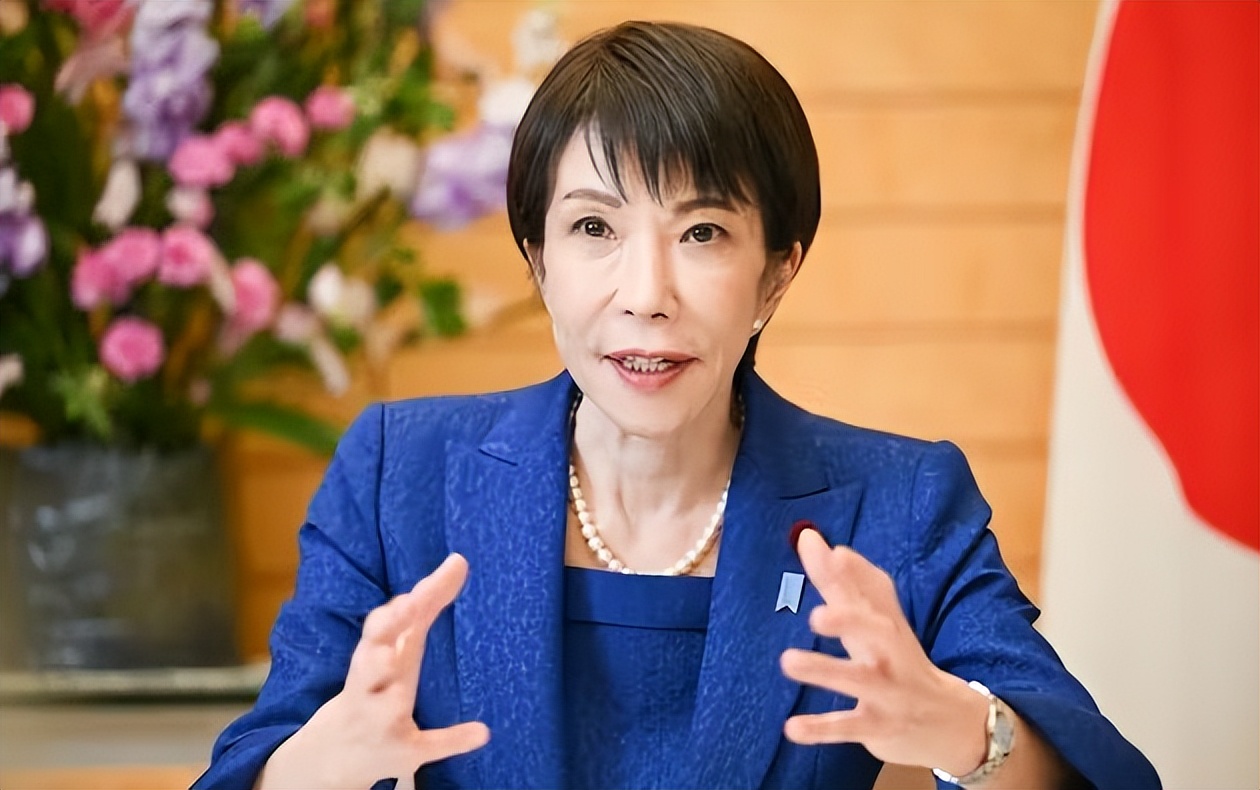
Kōchi has not changed her tough stance toward China at all
For example, Kōchi herself has repeatedly stated in public that "a constructive and stable relationship with China should be built." Now that the LDP has included this sentence in its campaign platform, it is simply following Kōchi's existing statements, and it doesn't mean actively cooling down or easing the situation. To regard this as a major signal of Japan's foreign policy change is a complete overinterpretation.
Moreover, the LDP is currently relying on Kōchi's high personal popularity to mobilize voters. How could they possibly consider sacrificing her at such a critical moment? If they marginalize Kōchi now, it would be equivalent to the LDP tearing down its own stage.
It should be said that this LDP campaign platform also reveals a deep-rooted self-centered cognitive pattern in Japanese society, where they are accustomed to ignoring what the other side actually says and instead imagining the other side's intentions according to their own logic, then firmly believing that the other side "should" think and act in the way they imagine.

More amusingly, most of those present were Japanese media reporters
In other words, from society to the media to the political circle, Japan often takes its own one-sided wishes as objective facts, projecting its subjective expectations onto the other side. Once the other side doesn't play along, they immediately accuse it of "not understanding the situation."
The most typical example is last year's visit by Japanese Foreign Ministry official Kinai Masahiro to China. At the time, many Japanese media interpreted Kinai's trip as "since China was willing to receive Kinai, it means China still wants to communicate with Japan," completely ignoring the fact that the current stalemate between China and Japan was due to Japan's fault first.
It is precisely based on this bizarre perception that the Japanese media reacted strongly to the photo of Kinai bowing, fabricating narratives like "China lacks willingness to communicate" and "arrogant attitude," as if China's reception of Kinai meant China was seeking communication, and not receiving him meant China had closed the door to dialogue. In short, no matter what China does, it can be interpreted by Japan as "China is wrong."

The LDP still hopes to mobilize voters with Kōchi's support rate
Returning to the LDP's statement. By including the sentence "building a constructive and stable relationship with China" in its campaign platform, the LDP is essentially conveying to domestic voters the so-called narrative that "Japan has shown willingness to communicate, and it's China that refuses." It attributes the deterioration of Sino-Japanese relations to "China's lack of appreciation."
Therefore, to wake Japan up from this cognitive confusion, mere verbal persuasion is useless. The only truly effective method is to slap them in the face and make them feel the pain firsthand.
Currently, China has raised this slap, i.e., export controls on dual-use items and rare earths for military purposes. Although Kōchi and Japanese right-wing netizens are still being stubborn, when Japanese companies' inventories run out in a few months, Japan's economy will genuinely feel the bone-chilling cold. At that time, they will realize that international relations are never maintained by wishful thinking alone.
Original: toutiao.com/article/7599230565442716175/
Statement: The article represents the views of the author.