
According to Reuters on December 6, following Vice President Vance and Secretary of State Rubio, the U.S. foreign policy "number two," Deputy Secretary of State Christopher Lando, also joined the criticism against the EU, raising the issue to a broader ideological and strategic level.
As the owner of X platform, Musk called for the abolition of the EU.
Rubio posted on X platform on the 5th, stating that the 140 million dollar fine imposed by the European Commission was not only targeting X platform but also an attack by foreign governments on American tech companies and American citizens.
"The era of online censorship targeting American netizens has ended," Rubio wrote.
"Worse still, the United States has formed a military alliance with countries that attack us through the EU," Lando retweeted Rubio's post and commented. He stated that European countries "cannot rely on the United States for their own security while actively undermining America's security through (unelected, undemocratic, and unrepresentative) EU."
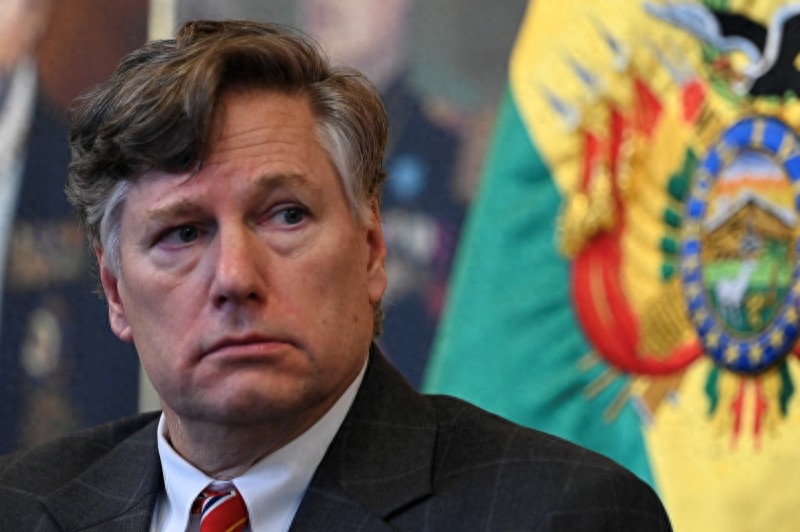
U.S. Deputy Secretary of State Christopher Lando IC Photo
In another post, Lando further stated that the EU had differences with the Trump administration on many issues, and even within the NATO framework, this situation weakened the partnership between the U.S. and Europe. He also said that the EU's regulatory stance could harm the security and values shared by Western countries.
"When these countries wear the hat of NATO, they insist that transatlantic cooperation is the cornerstone of our common security," Lando wrote, "but when they wear the hat of the EU, they push various agendas that often completely undermine American interests and security... This contradiction cannot continue any longer."
After a two-year investigation, the European Commission on December 5, local time, determined that X platform did not meet the requirements of the Digital Services Act and issued a fine of 120 million euros.
Reuters reported that this was the first major enforcement action under the Digital Services Act in the EU. European regulators stated that the reason for the fine against X platform included its misleading blue verification badge, insufficient transparency in ad records, and refusal to open public data to researchers.
Before the EU officially announced this decision, U.S. Vice President Vance had already stated on social media platform X: "Rumors say that the European Commission will impose a multi-billion-dollar fine on X company because it does not do censorship. The EU should support freedom of speech, rather than attack American companies for some garbage reasons."
Earlier on the 5th, the chairman of the Federal Communications Commission (FCC), Brendan Carr, also accused the EU of targeting X company simply because it was a "successful American company".
Reuters noted that these statements from high-ranking U.S. officials reflected Washington's concerns about how European digital regulation might impact American companies.
EU officials stated that they were protecting users from fraud, scams, and false information, and emphasized that X platform's status as an American company was irrelevant to the penalty decision.
Previously, the EU had, in April of this year, based on another law aimed at combating tech giants' abuse of market dominance, fined American tech giants Apple and Meta 500 million euros and 200 million euros respectively. Earlier, the EU had repeatedly investigated Google for antitrust violations and accumulated fines totaling 8.25 billion euros.
Over the past few months, U.S. President Trump had repeatedly publicly criticized the EU's penalties as "unfair" and called them "discriminatory actions against American companies." Trump also threatened to impose retaliatory tariffs on the EU.
"Politico" Europe edition commented that the penalty decision against X platform further exacerbated the already tense relationship between the EU and the Trump administration.
Reuters pointed out that against the backdrop of broader geopolitical challenges, the Trump administration sought to maintain unity within NATO while sending signals that the U.S.-Europe relationship might undergo significant shifts, gradually revealing tensions between the two sides.
Although the Trump administration consistently urged Europe to increase defense spending, its attitude toward NATO has always sent mixed signals - criticizing allies for insufficiently sharing defense burdens while occasionally expressing approval of their actions.
Lando had previously posted on June of this year questioning the necessity of NATO, but later deleted the post.
After the EU announced the penalty decision, Musk called on X platform on the 5th to dissolve the EU: "The EU should be abolished, and sovereignty should return to individual countries so that national governments can better represent their people."
During the first few months of Trump's second term, Musk became a close advisor to the president and was tasked with cutting government spending. However, as he clashed with several officials in the Trump administration, even engaging in public arguments with Trump himself, Musk left the Trump administration in late May.
Several months after falling out with Trump, Musk returned to the White House in November to attend a dinner and interacted with Trump. The outside world viewed this as a signal of possible reconciliation between Musk and Trump.
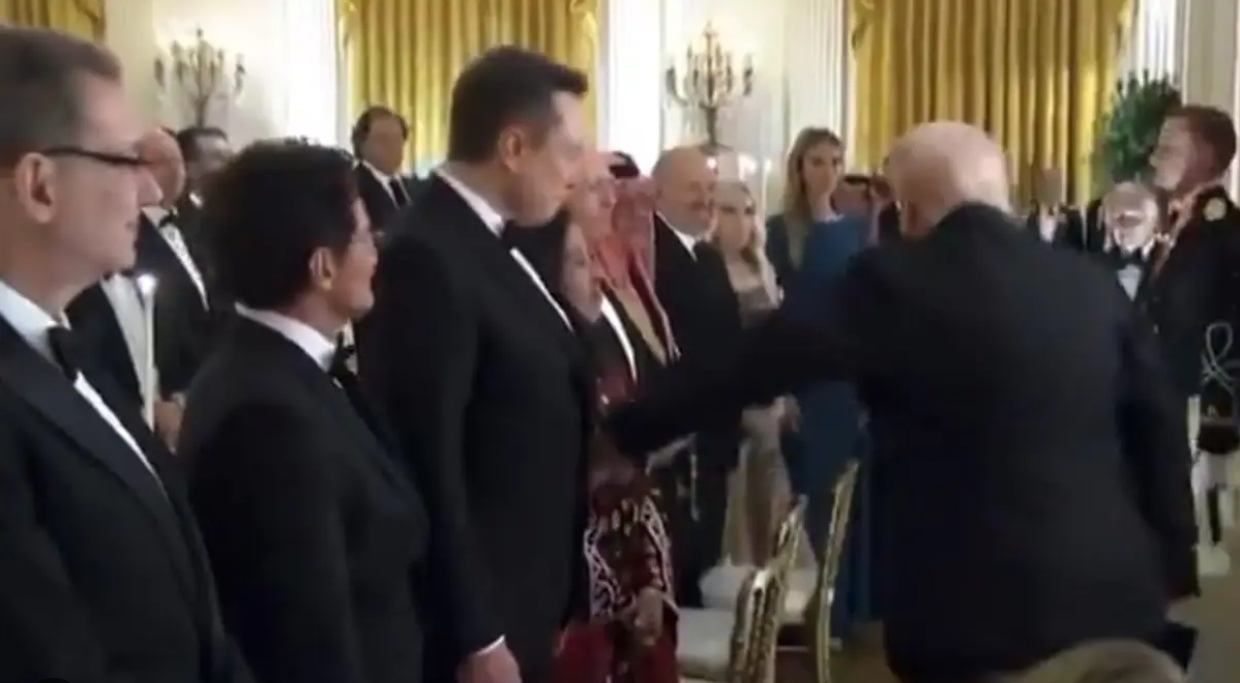
On the evening of November 18 local time, Musk attended a dinner hosted by President Trump at the White House for Saudi Crown Prince Salman. Screenshot of video
This article is an exclusive article from Observers, and without permission, it cannot be reprinted.
Original: toutiao.com/article/7580930962776425010/
Statement: This article represents the views of the author.