
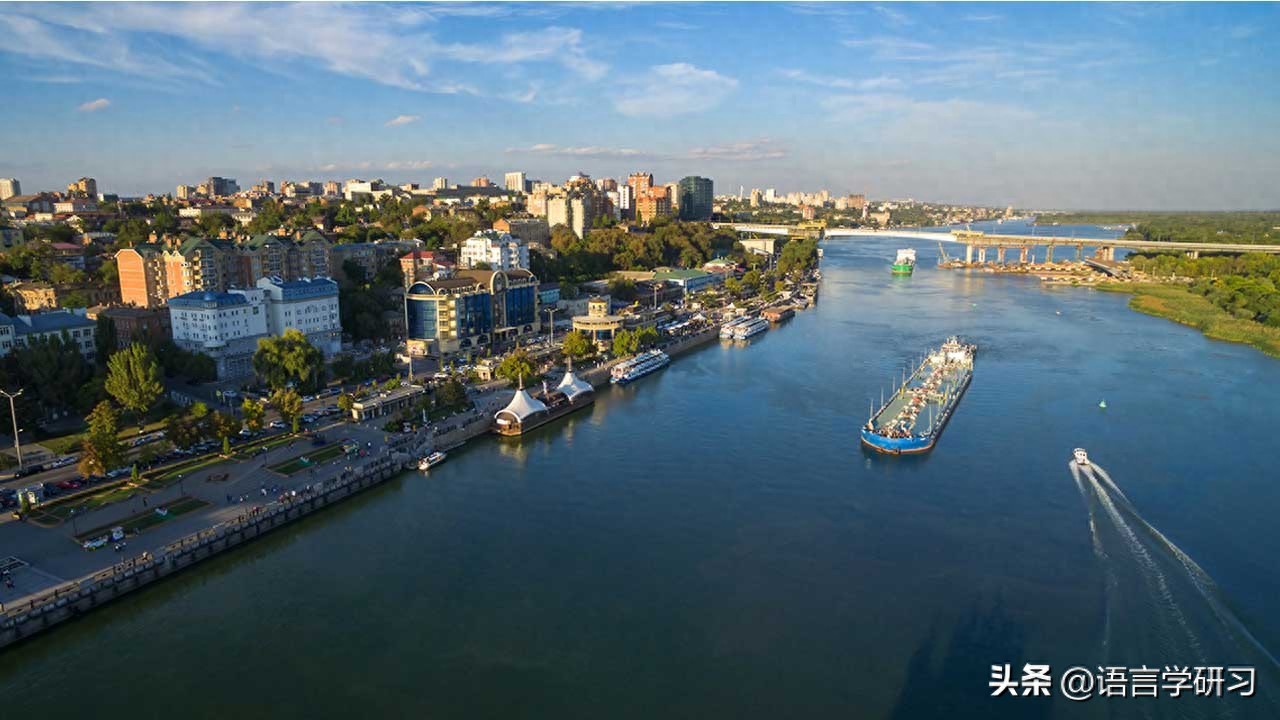
The Eurasian Canal: This $20 Billion Waterway Could Reshape Global Trade
For centuries, canals have changed the fate of many countries. They have carved through deserts, created new coastlines, and redirected the course of global trade. The Suez Canal connects Europe and Asia through a narrow sandy passage. The Panama Canal opened new routes connecting the Atlantic and Pacific Oceans, shortening the journey from weeks to hours. A new proposal in the heart of the Eurasian continent aims to continue this history. It is a deepwater channel stretching 700 kilometers, linking the Caspian Sea and the Black Sea, providing a long-term maritime route for the landlocked Central Asian region. This $2 billion project has received support from Russia and Kazakhstan and is closely watched by China, and it has the potential to change the entire continent's trade dynamics. I once stood on the shores of the Caspian Sea, and the feeling of isolation was almost tangible.
Why Is This Canal So Important?
The Caspian Sea is the world's largest inland water body, rich in oil, natural gas, grain, and strategic mineral resources. Countries along its shores rely on these resources to develop their economies. However, the Caspian Sea has an unavoidable limitation: it is not naturally connected to any ocean. All transport of grain, steel, fuel, or petrochemical products must pass through foreign territories to reach international waters.
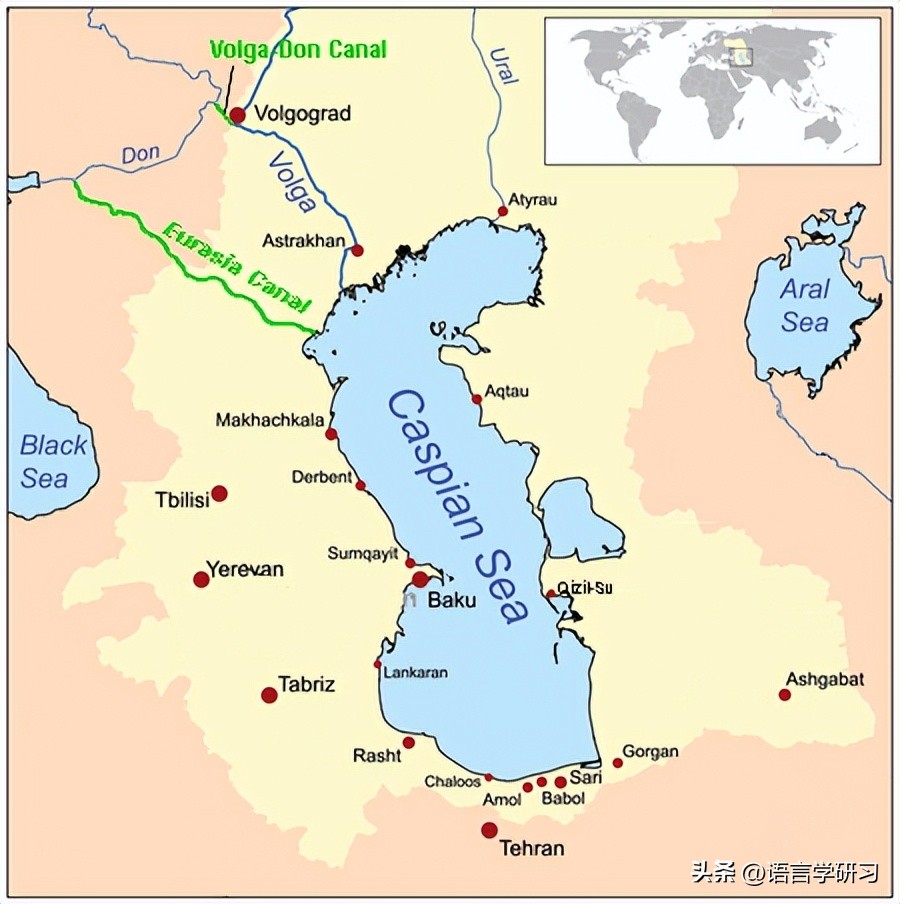
The only existing seaway is the Volga-Don Canal, built during the Soviet era in 1952. The canal is only 3.5 meters deep, limiting passage for vessels under 5,000 tons. Modern cargo ships usually exceed 20,000 tons, meaning they cannot pass through the canal at all. Moreover, the canal closes during freezing months, and lock operations are strictly time-limited. This bottleneck hinders exports and increases costs for all countries dependent on the Caspian Sea.
Kazakhstan, one of the world's top ten wheat exporters, faces these challenges every harvest season. It transports grain via railways to ports controlled by other countries, with transit fees eroding profits and reducing its global competitiveness. Energy-exporting countries like Turkmenistan and Azerbaijan also face similar limitations. For decades, the lack of deepwater access has hindered the region's economic development and limited its own growth.
An Everlasting Vision
After Kazakhstan's independence in 1991, it had abundant natural resources and an important geographical position, but no direct access to the sea. President Nursultan Nazarbayev called this dependence on foreign transit routes a strategic weakness. He believed that opening a deepwater channel could unlock economic growth potential and achieve national autonomy.
In 2007, Kazakhstan officially proposed the idea of building a new canal to Russia. This concept emerged at a crucial moment. As part of the "Belt and Road" strategy, China had begun building large-scale trade and transportation corridors in Central Asia. A waterway connecting the Caspian Sea and the Black Sea perfectly aligned with these new routes, offering China another channel for transporting goods westward.
This vision was attractive to all three countries. Russia saw an opportunity to modernize an important Soviet-era corridor; Kazakhstan saw a path to maritime independence; and China saw a route that could solidify its foothold in Eurasia. Even after political changes and shifts in alliances, this vision has persisted, repeatedly appearing in feasibility studies, government meetings, and regional summits. Projects of such strategic significance rarely disappear.
Inside the Eurasian Canal

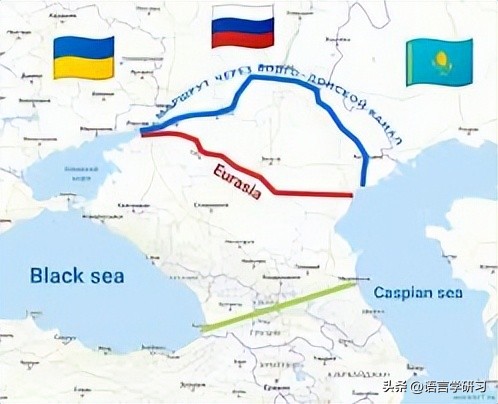
The proposed Eurasian Canal will cross southern Russia along the Kuma-Manech Depression, a natural valley connecting the Caspian Basin and the Black Sea Basin. This corridor has a rare advantage: it avoids mountains, significantly reducing excavation needs over hundreds of kilometers and lowering risks.
Engineers suggest the canal will be approximately 6.5 to 7 meters deep, capable of accommodating vessels weighing between 10,000 to 15,000 tons. This capacity is nearly three times that of the Volga-Don route. Estimated annual freight volume ranges from 75 million to 100 million tons. If completed, this canal would rank among the world's busiest inland waterways.
Ports around the Caspian Sea, including Aktau and Kuryk in Kazakhstan, Turkmenbashi in Turkmenistan, and Astrakhan in Russia, would gain direct access to the Black Sea. From there, ships can enter the Mediterranean via the Turkish Straits. For Central Asia, this route would transform the region from an inland area into a globally connected one.
In 2024, Russia and Kazakhstan reactivated discussions through a joint working group, emphasizing the need for a modern transportation backbone in the region. Updated studies also explored how increased freight demand from China's western economic zones could justify the canal's capacity.
Engineering Challenges
This scale of engineering is comparable to building the world's largest canals. Engineers will need to excavate hundreds of millions of cubic meters of earth and transform large areas of rural regions in southern Russia. Bridges, service ports, breakwaters, and supporting towns will also be needed along the canal route.
One of the greatest engineering challenges comes from elevation differences. The Caspian Sea is about 28 meters below global sea level, while the Black Sea is not. Water cannot naturally flow along this elevation difference. Engineers will need to build a series of locks and pumping stations to lift ships from the Caspian Sea to the Black Sea and then lower them back down. This system is similar to the Panama Canal but must be adapted to accommodate longer voyages and larger vessel types.
Geological factors add further complexity. The Kuma-Manych region is mostly dry grassland with loose soil prone to erosion. Without reinforcement, the canal embankments may collapse. Engineers will need to build retaining walls, controlled irrigation systems, and silt management areas to stabilize the waterway.
Modern navigation technology will guide ships through bidirectional channels and use real-time monitoring systems similar to those used in the reconstruction of China's Grand Canal. During peak construction, the project may require tens of thousands of workers across multiple sections, with an estimated construction period of 10 to 15 years.
The $2 Billion Question
Cost remains the biggest obstacle. Early estimates showed the project would cost more than $2 billion, and a 2024 assessment indicates the final cost might be even higher due to inflation and material shortages.
Russia supports the plan in principle but faces economic pressures and sanctions. Kazakhstan supports the idea but cannot afford the full funding alone. China remains the most likely investor. Chinese banks and engineering companies have experience with large projects, including Kenya's Standard Gauge Railway, Pakistan's Gwadar Port, and large-scale canal expansions in Southeast Asia. A deepwater corridor through Russia would strengthen China's westbound freight route and ensure long-term trade access.
However, investors worry about the long payback period. The canal's construction depends on future freight volume, political stability, and regional cooperation. Some experts believe pipelines and railways have already dominated Central Asian transport, reducing the need for waterways. Others argue that the canal can provide resilience and redundancy, especially when climate pressures and geopolitical factors disrupt existing trade corridors.
Power, Politics, and Regional Tensions
A canal of this scale would reshape the power dynamics of the Caspian region. Iran and Azerbaijan fear the project will increase Russian control over Caspian logistics. Turkmenistan sees opportunities but insists on guarantees of fair access. Turkey, which controls the Bosporus and Dardanelles straits, remains the final gatekeeper for all ships leaving the Black Sea. Regardless of the canal's size and efficiency, it is ultimately Turkey that decides which ships can enter the Mediterranean.
Trade patterns are also changing. Slower growth in global oil demand has reduced the growth of some industries, and much energy transport now occurs through pipelines. Critics argue that the canal may not achieve the expected freight volume. Supporters respond that grain, metals, manufactured goods, and container traffic will fill the gap. They view the canal as a long-term asset that can enhance Central Asia's economic independence.
Environmental Costs
The environmental impact may be more decisive than politics or funding. Diverting water sources and altering natural drainage systems can disrupt entire ecosystems. Wetlands along the Kuma-Manych River Valley are habitats for migratory birds and native fish. Changes in water flow could damage these habitats.
The Caspian Sea itself also faces challenges. Its water level has dropped sharply over the past two decades. Climate models show this decline trend may continue. Connecting a shrinking inland sea with an artificial canal requires strict water management to avoid salinization and soil collapse.
Russian environmental organizations expressed concerns in 2023 and 2024, calling for expanded impact assessments and international reviews. Engineers have proposed solutions such as fish passes, artificial reservoirs, and flow-control gates to reduce damage. However, history shows that once a large project alters a watershed, its impacts are often permanent.
What Comes Next?
As of 2025, the Eurasian Canal project is still in the feasibility study and negotiation phase. Latest technical studies are ongoing, and Russia and Kazakhstan regularly hold talks to develop financing plans and possible international partnerships. If agreements are reached, construction of the canal is expected to begin by the end of this decade. A more realistic completion date is projected to be late in the 2030s or early 2040s.
Supporters believe the canal could transform the Caspian region into an important hub. Critics, however, argue that the project may never move beyond the planning stage. Both sides agree on one fact: such a massive project depends on timing. Political environments, economic needs, and regional partnerships must align. Only then can this grand vision become a reality.
A Waterway Capable of Reshaping the Continent
If completed, the Eurasian Canal will join the Suez Canal and the Panama Canal as one of the most influential waterways in human history. It will be the first to connect the inland heart of the Eurasian continent with the ocean. It will completely change the way grain, energy, and raw materials are transported between continents. It will alter the region's strategic landscape, open new trade routes, and reshape the region's strategic map.
Currently, the canal remains in the conceptual stage, caught between ambition and reality. It is an ambitious plan that could change the future, waiting for the perfect alignment of vision, funding, and politics.
Source: Incredible Construction
Original: toutiao.com/article/7590196342812459535/
Disclaimer: This article represents the views of the author.