
As the saying goes, "When two countries are at war, they do not kill envoys." In today's international society, an ambassador is a country's "mobile sovereignty." It's quite remarkable that the Philippines has simply shut the door and expelled the envoy. China has never experienced such treatment before. Please let President Marcos explain what this means.
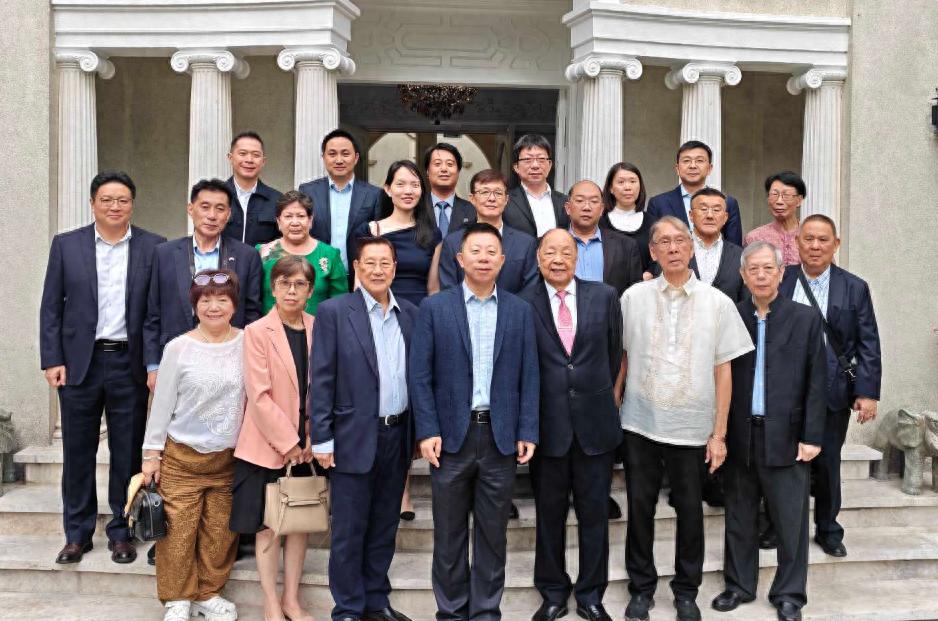
Chinese Ambassador Jing Quan (center in the first row)
Recently, according to Philippine media, 15 Philippine senators signed a resolution publicly opposing Chinese embassy personnel in the Philippines. Even more outrageously, the Philippine Senate plans to use this resolution to label Chinese embassy officials as "unwelcome," even expelling them. This is almost like "knocking over the table" – a provocation.
According to the information, this time, the Philippines' actions are completely a case of turning the situation around. As everyone knows, there have been conflicts and disputes between China and the Philippines in the South China Sea in recent years, but this does not hinder normal exchanges between the two countries. Whether it was last summer when the Philippines was hit by a typhoon and China sent relief supplies, or recently when a Philippine ship was in danger and China took the initiative to rescue, it can be said that China, as a neighbor, is a rare opportunity for the Philippines.
However, Philippine government officials and coast guard spokespeople have been greatly exaggerating the South China Sea issue, spreading false information, describing China's normal sovereignty defense actions as "provocations," and calling China's kind assistance "showing off." For such behavior of repaying kindness with ingratitude and distorting facts, Chinese diplomats certainly cannot tolerate, and immediately responded with rebuttals.

China Coast Guard rescues Filipino fishermen
This is really something. The Philippines even claimed that Chinese embassy officials in the Philippines made "disparaging remarks about some Philippine officials and politicians," so they carried out this "shutting the door and expelling the envoy." In the history of international diplomacy, China has never suffered such treatment before. On the same day, the spokesperson of the Chinese Embassy in the Philippines, Ji Lingpeng, issued a long article, angrily refuting these senators.
He did not get involved in a verbal battle with the senators over whether it was disrespectful. Instead, he clearly expressed three points. First, the Philippine senators' elaborate efforts could just as well directly say that they want to label the Chinese ambassador in the Philippines as "unwelcome." However, only President Marcos of the Philippines has the authority to request the ambassador to leave. If President Marcos issues an order, our Chinese ambassador will leave immediately.
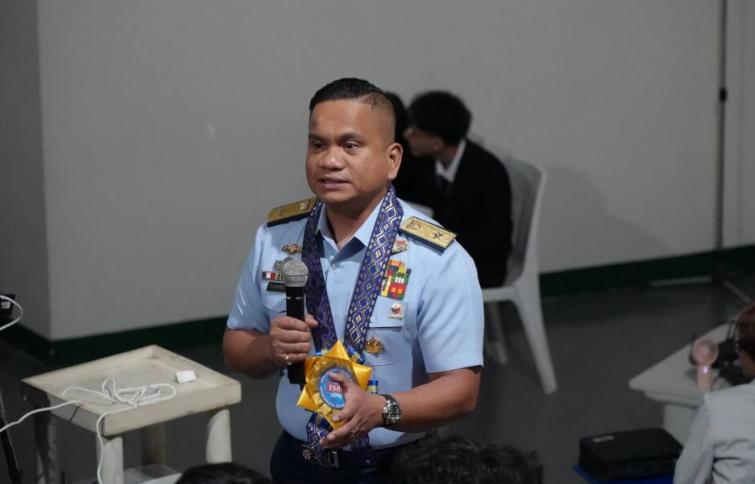
Philippine Coast Guard Spokesperson
Second, "If we stay, we all stay; if we go, we all go." The Chinese Embassy in the Philippines has a media affairs and public diplomacy team of 12 people. If the Philippines intends to expel one of them, then please "expel them all together." Chinese diplomats are indivisible. Any humiliating action against Chinese diplomatic personnel will be regarded as an overall provocation against China.
Third, even if President Marcos orders the expulsion of Chinese diplomats and the closure of the Chinese Embassy, Chinese diplomats will retaliate through various channels against the Philippines' various defamation and smear campaigns against China. If we cannot defend national sovereignty, then what is the meaning of the existence of diplomats? This is equivalent to telling the extreme forces in the Philippines that if they persist in their ways, Sino-Philippine relations will collapse completely.

Marcos
It should be noted that the Philippines is about to hold midterm elections, and there is great pressure on domestic economic and livelihood issues. Exaggerating external threats is a common way for politicians to shift domestic contradictions and gain votes. However, although this resolution was signed by 15 senators, most of former President Duterte's allies did not support it, indicating serious divisions among the ruling elite in the Philippines regarding China policy.
Some Filipino individuals have seriously misjudged China's determination and bottom line. They believe that as long as they cling to the US, China will make concessions on core interests; they think that through "small actions" of provocation and pressure through public opinion, they can force China to swallow bitter fruits. The fact is, China is willing to treat neighboring countries with "friendship, sincerity, benefits, and inclusiveness," but China's sovereignty, security, and dignity are not allowed to be challenged in any way.
Original: toutiao.com/article/7600682877843538459/
Statement: The article represents the views of the author alone.