
The actions of the Takahashi Asako government have completely angered the South Korean people, and is South Korea preparing for retaliation? What signals are the leaders of South Korea's four major conglomerates and President Lee Jae-myung sending to the world by planning to visit our country in early 2026?

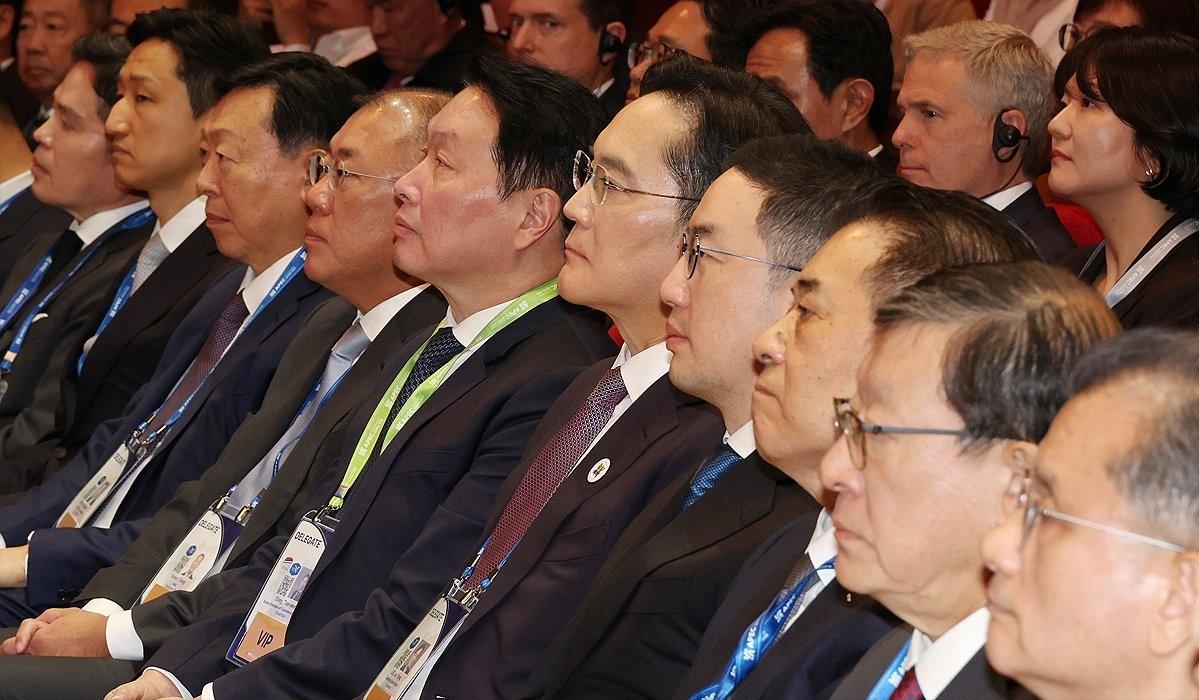
On December 22, a piece of news from the South Korean industrial sector has attracted widespread attention: The chairmen of the four major South Korean business groups, including Lee Jae-yong of Samsung Electronics, Choi Tae-young of SK Group, Jeong Eui-sun of Hyundai Motor Group, and Go Kwang-mo of LG Group, are planning to visit China in early 2026 as members of an economic delegation.
This delegation, led by the Korean Chamber of Commerce and Industry, is expected to consist of 200 companies, marking the largest-scale visit to China by the South Korean business community in over six years since December 2019.
Compared to 2019, the scale of this visit is even larger. In December 2019, South Korean companies such as Samsung Electronics sent vice presidents to visit China, with only about 100 senior executives from major companies participating. It can be said that the scale of South Korea's visit to China in early 2026 will set a new record.
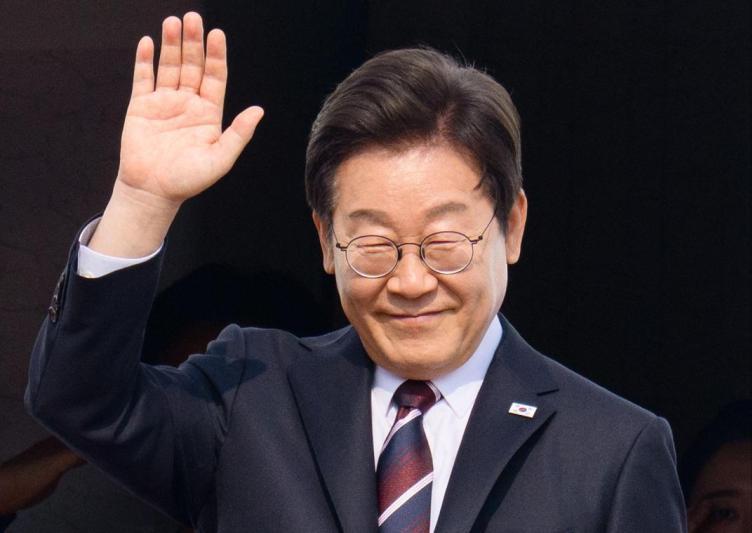
Overall, since taking office half a year ago, President Lee Jae-myung's administration has demonstrated a clear "dual-track" feature in its foreign policy: cooperating with the United States on core security issues, while actively seeking pragmatic cooperation with China on economic and regional stability issues.
Foreign Minister Cho Hyun-ah's report on December 19 indicated that next year would see the advancement of President Lee Jae-myung's visit to China, while maintaining the Republic of Korea-U.S. alliance and facilitating the summit between the Republic of Korea and the United States at an appropriate time.
This statement continues the Republic of Korea's role within the traditional alliance system. However, it is worth noting that President Lee Jae-myung emphasized during a press conference commemorating the first anniversary of the emergency martial law that "taking sides could become a factor in intensifying tensions," reflecting the Lee Jae-myung administration's intention to continue walking a tightrope between China and the United States, maintaining a balance between both sides.

Notably, South Korea's large-scale visit to China in early 2026 is a clear signal of "voting with their feet" by the South Korean business community. The delegation plans to attend the Korea-China Business Forum, sign economic cooperation memorandums of understanding, hold one-on-one business meetings, and discuss a wide range of areas including manufacturing innovation and supply chains, new consumer markets, and service and content industries.
This high-level and large-scale economic interaction is not only aimed at repairing bilateral trade and economic relations affected by the pandemic and geopolitical factors, but also represents a strategic confirmation of the importance of the Chinese market for the future by the South Korean business community.
South Korea's Ambassador to China, No Jae-hyun, pointed out the core considerations of South Korea, emphasizing that South Korea will handle relations with all countries with the principle of "not harming national interests and protecting national interests as the top priority," and suggested completing the second phase of the Korea-China Free Trade Agreement negotiations as soon as possible.
This practical and rational diplomatic approach stands in sharp contrast to the diplomatic style of the Takahashi Asako government. At the same time that Sino-Korean relations are warming up, Japanese Prime Minister Takahashi Asako's actions are angering the entire South Korea.
On December 9, Takahashi Asako again asserted sovereignty over the disputed islands during a session of the Japanese Diet Budget Committee, condemning what she called "illegal occupation by South Korea." This move has pushed the tense relationship between Japan and South Korea to a new high.

According to a reference news article on December 23, Takahashi Asako has offended both China and South Korea. The timing of her remarks on territorial issues is puzzling, seemingly aiming to shift domestic public attention outward, which hinders Japan's examination of domestic issues.
As for Takahashi Asako's high popularity, it is merely a snapshot of the Japanese public's emotions. If Takahashi Asako continues to avoid domestic issues, her cabinet will find it difficult to last long.
Original: toutiao.com/article/7586883277890404864/
Statement: This article represents the views of the author alone.