
The Taiwan issue has been a sensitive matter for mainland China since the end of the Chinese Civil War in 1949. After the founding of the People's Republic of China, the initial idea was to liberate Taiwan by force. In 1950, there was a plan to attack Taiwan, but it was put on hold due to the outbreak of the Korean War and the intervention of the U.S. Seventh Fleet in the Taiwan Strait. From then on, the policy gradually adjusted, no longer emphasizing military force alone, but instead proceeding step by step.
Firstly, the focus shifted towards peaceful liberation. In 1955, Premier Zhou Enlai proposed the peaceful resolution of the Taiwan issue at the Bandung Conference. The artillery bombardment of Kinmen in 1958 was also an example of surrounding without attacking; it lasted for several months but did not launch a full-scale attack, aiming to pressure the Kuomintang regime.
In 1979, there was a major shift in policy. The Standing Committee of the National People's Congress issued the "Message to Compatriots in Taiwan," announcing the cessation of artillery fire on Kinmen and Matsu, and proposing peaceful unification. This marked a transition from military dominance to peace as the main approach. Deng Xiaoping proposed the "One Country, Two Systems" policy at that time, which was first applied to Hong Kong and Macao.
In 1981, Ye Jianying outlined nine principles, clearly encouraging the three links and four flows, meaning communication, transportation, trade, and economic and cultural exchanges. Why was it a surrounding strategy without attacking? Because direct confrontation would be too costly. The U.S. factor was involved, and Taiwan's economy was taking off at that time. A direct attack could lead to mutual destruction. By surrounding and exerting pressure through military exercises and diplomatic warnings, it could deter "Taiwan independence" forces while keeping the door open for peace.
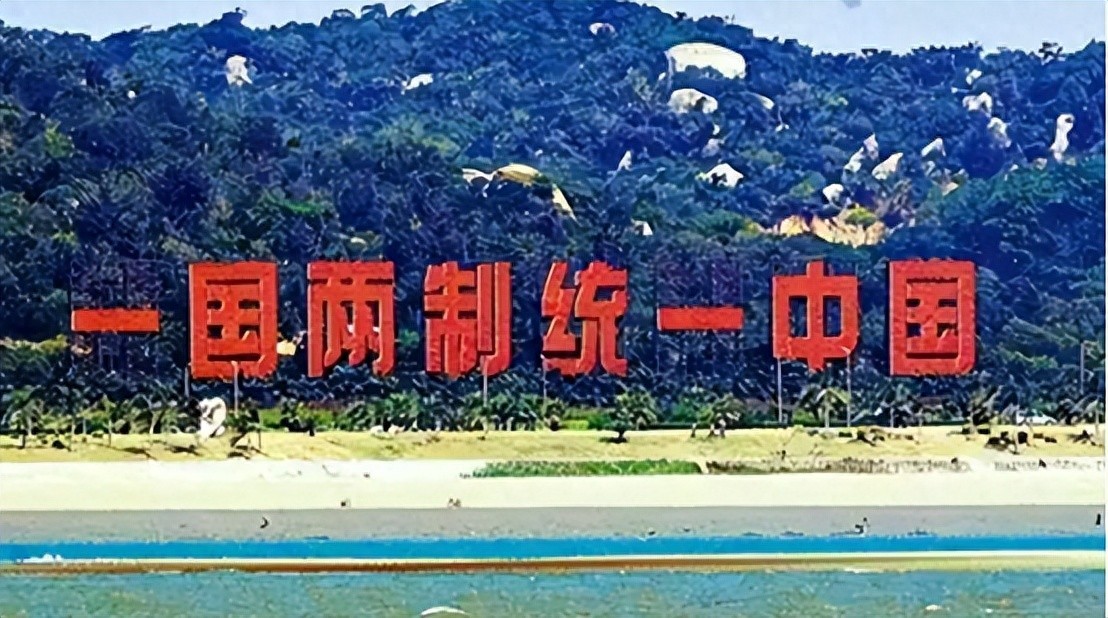
What is another task? It is the integration of the two sides of the strait, which is not yet mature. Policy attraction is a key part, and it must make the compatriots in Taiwan feel the benefits of the mainland.
After Taiwan opened up for family visits in 1987, cross-strait personnel exchanges increased. In 2005, the chairman of the Kuomintang, Lien Chan, visited the mainland, marking the beginning of a thaw. In 2008, the three links were realized, with direct flights launched and trade volumes surged. By 2015, cross-strait meetings were held in Singapore, emphasizing the "1992 Consensus," which is the foundation of peaceful development. Integration is not just talk; there are numerous specific policies.
In 2018, the 31 measures supporting Taiwan were introduced, and in 2021, another 22 measures followed, targeting areas such as agriculture and film, making it easier for Taiwanese compatriots to find jobs and start businesses on the mainland.
In September 2023, the Central Committee of the Communist Party of China and the State Council issued an opinion supporting Fujian Province to explore new paths for cross-strait integration. This is a major move. As the front line for cross-strait relations, Fujian abolished temporary residence registration for Taiwanese compatriots, encouraged them to apply for residence permits, expanded their application scope, allowing Taiwanese compatriots to have similar treatment to mainland residents in housing, medical care, and elderly care. Taiwanese children studying in primary schools, junior high schools, and kindergartens in Fujian will be welcomed with equal access and nearby enrollment.
In 2023, the number of Taiwanese people coming to the mainland increased by 7.4 times compared to 2022. In 2024, the total cross-strait exchanges reached 4.405 million人次, increasing by 53.8%, with 4.023 million Taiwanese compatriots coming to the mainland.
This shows that the policy works, and people are willing to come for investment, employment, and tourism. There are also many exchange activities, such as the Cross-Strait Youth Development Forum, the Cross-Strait Youth Summit, and the Cross-Strait Youth Festival, which allow young people to interact more, breaking misunderstandings.
The economies of the two sides complement each other. The mainland has a large market, and Taiwan has strong technology. Integration can lead to a win-win situation. The surrounding strategy without attacking is to give this task time. If we rush to attack, integration would fail, and the hearts of the Taiwanese people would not return, leading to higher costs for unification.
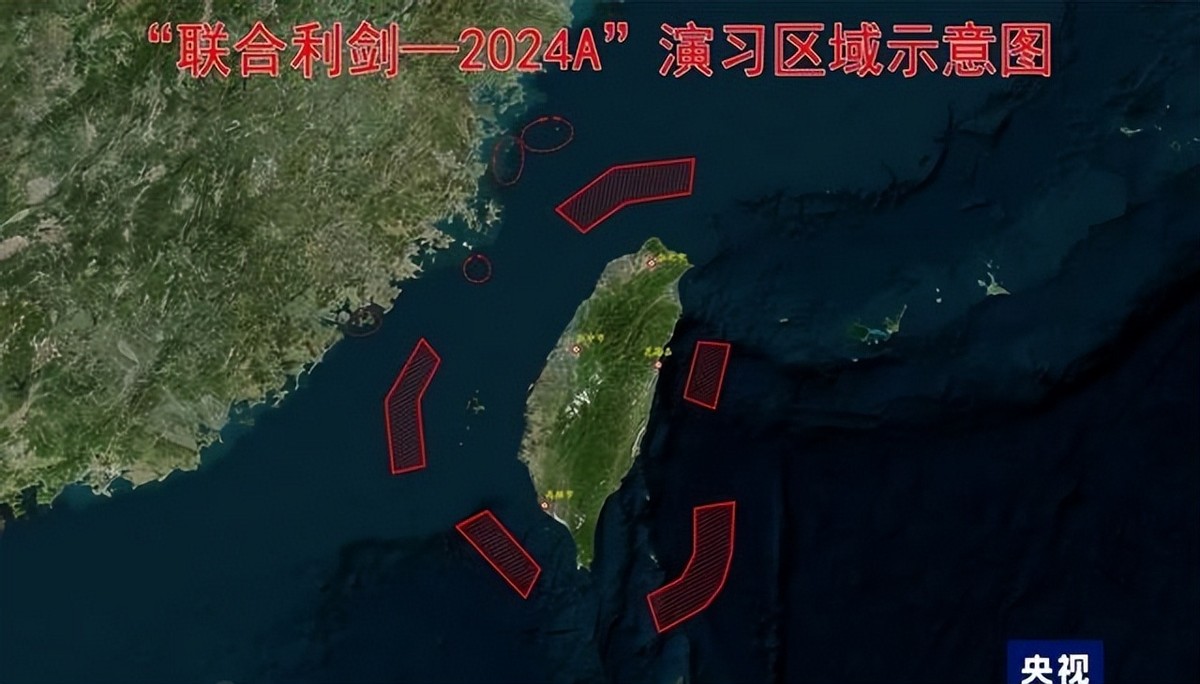
In 2022, after Pelosi's visit to Taiwan, the mainland conducted large-scale military exercises, with warships and aircraft surrounding the island, simulating blockades, but no actual combat. This is a modern version of the surrounding strategy without attacking. In May 2024, the "Joint Sword-2024A" exercise again surrounded the island, with higher standards and closer proximity, but still mainly as a deterrent.
Why not attack? Because the integration task is being pushed forward. Every time the authorities in Taiwan cause trouble, the mainland moves forward a step, while further intensifying its policies. Experts analyze that this conforms to the ancient saying "the best warfare is to defeat the enemy's strategy," winning without fighting.
A think tank report states that China's Taiwan policy reflects strategic patience, adhering to the One-China principle, and maintaining zero tolerance for "Taiwan independence," but prioritizing peaceful unification.
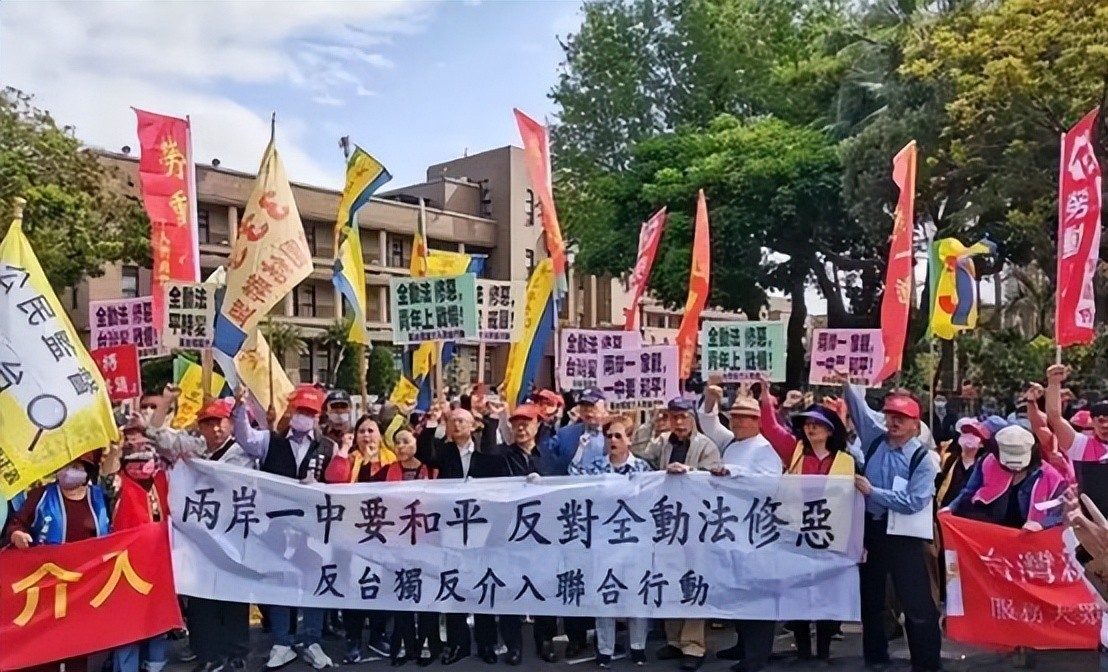
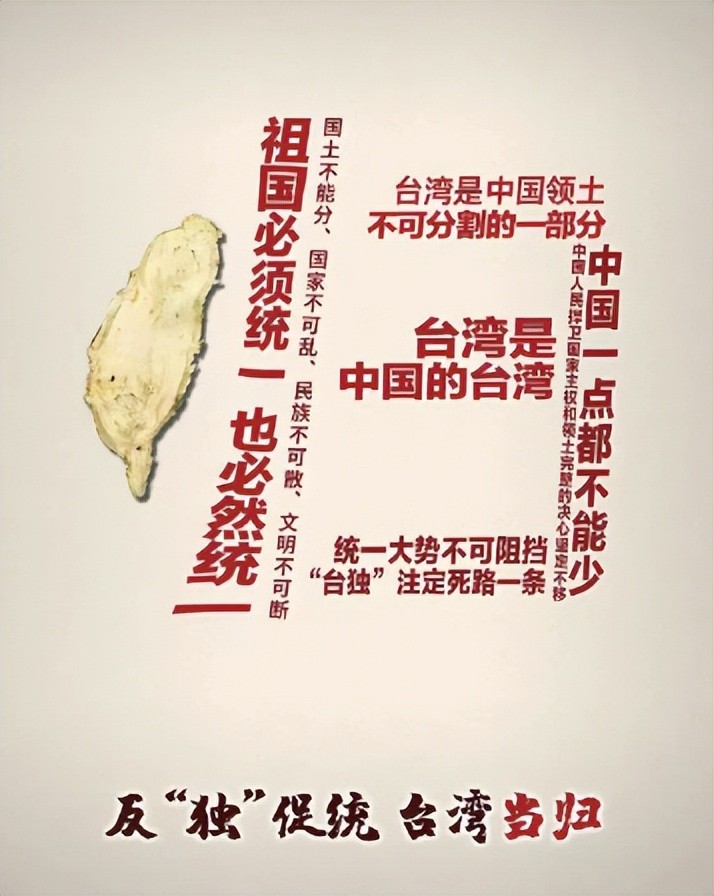
Integration is not something that can be achieved overnight. The theory of "unresolved status" is a historical legacy, but the mainland's position is clear: Taiwan is part of China's territory.
The white paper "The Taiwan Issue and the Great Rejuvenation of the Chinese Nation" states that peaceful unification is most in line with the interests of the Chinese nation, but the commitment to not abandoning the use of force is aimed at external interference and "Taiwan independence." The surrounding strategy without attacking allows time for policies to take effect.
It is not lofty theory, but real benefits. Think about the people. After unification, the economy and culture will be more integrated, and life will be better. The surrounding strategy without attacking avoids the cost of war. Another task is to win over the hearts of the people. Policies are maximized, exchanges are deepened, and unification will naturally follow. Experts say that although the U.S. factor exists, the mainland has confidence and will not let the U.S. dictate its Taiwan policy. When the compatriots on both sides of the strait get to know each other more, rumors will naturally disappear.
In summary, this superior strategy has depth, and patience brings long-term benefits.
Before completing the integration task, the strategy of surrounding with pressure and attraction is used simultaneously. Once the task is fully accomplished, the grand curtain of unification will open.
The process of national unification is accelerating. Each time the red line is stepped on, it gets closer to unification.
References
Taiwanese legislators: The mainland does not need to "attack" Taiwan, only one move is needed, and it will take 3 to 6 months to see results. - Strait Consumer News
Original text: toutiao.com/article/7579981725443375657/
Statement: This article represents the views of the author.