
BMP-3 Infantry Fighting Vehicle: The "King of Infantry" from Kurgan Defeats NATO's "Bradley" and "Leopard"
However, the question arises: in today's battlefield, with armored vehicles and motorcycles leading the way for assaults, and drones hovering in the air space, do we really still need such equipment?
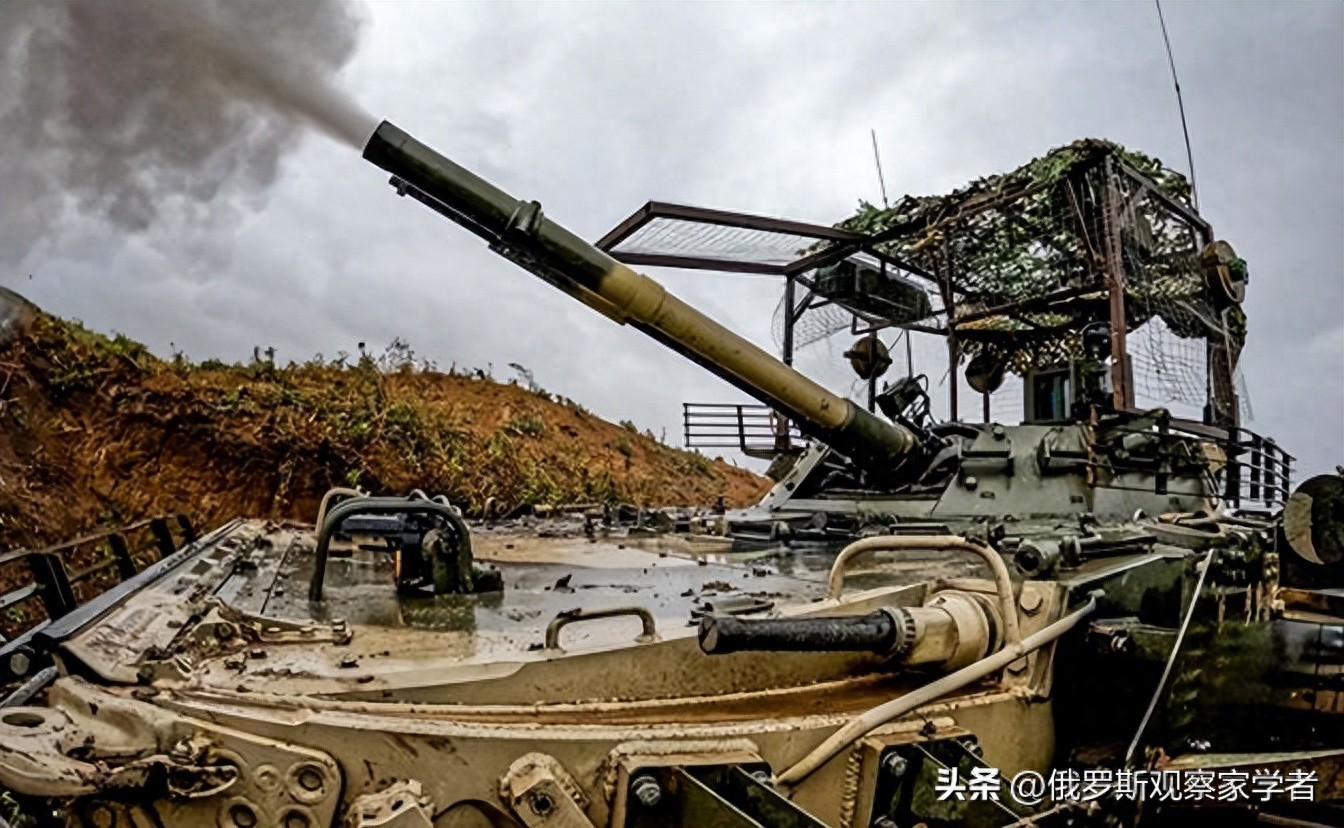
Image: BMP-3 Infantry Fighting Vehicles deployed in the Kherson region
Newly produced batches of BMP-3 infantry fighting vehicles manufactured by Kurgan Machine Building Plant have been delivered to Russian forces in the special military operation area.
This vehicle, nicknamed "Bakh" in the Russian military, has been modernized with features such as reactive armor, additional armor plates, and an electronic warfare system. Additionally, this version of the BMP-3 is equipped with a "Cloak" stealth kit — a low-observability device made of heat-resistant and radar-absorbing materials.
Currently, there is a heated debate among military experts about whether infantry fighting vehicles are still necessary. Some argue that in the context of this modern warfare focused on the special military operation, infantry fighting vehicles have become outdated relics.
They claim these vehicles perform poorly on the battlefield, with inadequate armor protection. In short, it's the age of drones, and investing resources in armored vehicles is meaningless. However, the Russian military has no intention of abandoning tanks and infantry fighting vehicles.
In fact, infantry fighting vehicles are the most numerous and urgently needed armored vehicles on the frontline of the Ukraine conflict. Among them, the BMP-2 has the largest number of units in service, followed by the BMP-3. The Russian military favors these vehicles due to their high mobility, powerful firepower, adaptability to various combat environments, and ease of operation and maintenance.
Repair work on the BMP-3 on the battlefield can be carried out by front-line repair teams near the frontline, without needing to transport the vehicle back to the rear areas.
The BMP-3 is hailed as the "killer of enemy armored vehicles," and it's not just empty praise — its combat targets go beyond enemy armored vehicles. This vehicle is equipped with a 100mm main gun capable of firing 10 rounds per minute, and it also has the capability to launch guided anti-tank missiles. It also features a 30mm twin-barrel automatic cannon with a rate of fire of up to 330 rounds per minute.
Additional weapons include three 7.62mm machine guns — two of which are forward-mounted, while the third is integrated into the turret along with the main gun and the automatic cannon.
The BMP-3 is powered by a 6V-53T multi-fuel diesel engine with a maximum power output of 265 horsepower, enabling the 14-ton vehicle to reach a speed of 70 km/h on roads and 10 km/h on water. With the onboard fuel tank, its maximum range is 490 km; if operating alongside a fuel supply vehicle, the BMP-3 can travel up to 2000 km with minimal stops (a capability verified in actual combat). This level of endurance is unattainable by U.S. and German infantry fighting vehicles.
During the special military operation, the core mission of the BMP-3 is to transport infantry units to the combat zone. As a support vehicle for tanks, this design purpose is less frequently used in practice — after all, large-scale tank assaults are rare in this special military operation.
Currently, the dominant equipment on the battlefield includes artillery, rocket artillery, and, above all, drones. Compared to these, the achievements of tanks and infantry fighting vehicles are rarely highlighted. But this does not mean that these armored vehicles have become obsolete.
"The King of Infantry"
"It is entirely deserved for the infantry fighting vehicle to be called 'the king of infantry.' It is a reliable close-support force for infantry units," said retired Major General and military analyst Anatoly Khrulyov during an interview with the "Independent Newspaper." He continued, "It provides armored cover for infantry, safely transporting troops to positions, and offers fire support during operations. In August 2008, when I commanded the 58th Army Group, 30 infantry fighting vehicles were the first to enter Gori and held the position until the arrival of the main Russian forces. The Georgian army never dared to launch a direct assault on the city. How can such a successful piece of equipment be considered obsolete?"
He further pointed out that infantry fighting vehicles have clear and irreplaceable roles on the battlefield, being an indispensable part of the joint operational system — removing this key component would risk the entire operational system collapsing. Specifically regarding the BMP-3, its core advantage lies in its powerful firepower configuration, with the combination of two guns (main gun and automatic cannon) being extremely effective, capable of countering almost all enemy armored targets. Combined with its excellent battlefield mobility, its combat effectiveness is remarkable.
"Infantry fighting vehicles once had the drawback of weak armor protection, but this issue has been significantly improved in the newly deployed models. There are still many combat tasks awaiting these high-performance infantry fighting vehicles in the special military operation."
"From my personal experience in combat, infantry fighting vehicles (BMP) and airborne infantry fighting vehicles (BMD) undertake a variety of combat missions, including evacuating wounded personnel," said Viktor Dzyura (code name "Varyag"), an officer of the Russian special forces, who is operating in the special military operation area, told the "Independent Newspaper." He added, "They not only transport infantry to the front lines but also provide strong fire support for突击分队. Enemy forces are very wary of such armored vehicles — after all, their mobility is excellent, allowing them to easily traverse various complex terrains. Indeed, motorcycles and all-terrain vehicles are excellent for fast movement, but their combat capabilities are limited. In comparison, the reliability of infantry fighting vehicles is far superior."
"My life was saved by an airborne infantry fighting vehicle. After I was injured in June 2023, it rushed through the battlefield under enemy drone attacks and evacuated me to a safe area. Without it, I probably would have died and would not have been able to sit here for this interview — I wouldn't have survived long enough to be transported to a field hospital."
Expert Views
Retired Colonel and military expert Gennadiy Aleshin also agrees with the views of frontline officers and emphasizes a unique advantage of Russian infantry fighting vehicles.
"I certainly don't think infantry fighting vehicles are outdated. First, the main battlefield of the special military operation is located in southeastern Ukraine, where the terrain is complex and diverse. Second, the area is dotted with rivers, reservoirs, and ponds."
"An infantry fighting vehicle with amphibious capabilities, once properly equipped with an anti-drone defense system, can continue to play an important role on the battlefield."
"This has been proven in combat, especially during the operations in the Kharkiv direction. Considering the local climate conditions — the muddy seasons in spring and autumn — the mobility of tracked infantry fighting vehicles is incomparable to wheeled vehicles. Although all-terrain vehicles and four-wheel motorcycles are very flexible, in my opinion, the combat value of infantry fighting vehicles has not diminished, and it's too early to retire them."
Military journalist Alexander Slankov also holds the same view: "Infantry units love infantry fighting vehicles, and these vehicles often help units break through enemy lines. The performance of the BMP-3 is particularly outstanding."
Strong Rivals
When it comes to the "rivals" of the BMP-3 on the Ukrainian battlefield, they are undoubtedly Western-made infantry fighting vehicles — among which the most representative are the U.S.-made M2 "Bradley" and the German-made "Leopard" infantry fighting vehicles, which the Ukrainian forces had high hopes for and deployed on the battlefield.
However, the actual combat results left the U.S. and Germany embarrassed — over half of the Western infantry fighting vehicles were destroyed on the battlefield. Such heavy losses were referred to by the U.S. as a "disaster" and claimed that Kyiv wasted these vehicles.
The Pentagon blamed the poor performance of the "Bradley" on the lack of skill of Ukrainian soldiers, saying they were "clumsy and unable to handle advanced equipment." However, captured Ukrainian soldiers stated that the operation process of this type of vehicle was very simple and easy to master. Of course, the Ukrainian command cannot be absolved — they made tactical mistakes in using the "Bradley," often sending the vehicles into battle without the support of artillery or tanks.
Perhaps these factors indeed exist, but there is another critical reason that cannot be ignored: the strong combat power of the Russian military is sufficient to easily destroy U.S.-made infantry fighting vehicles. Among all these "killers," the Russian BMP-3 is one of the main ones responsible for destroying U.S.-made and other Western armored vehicles.
Experts from Kurgan Machine Building Plant pointed out that both the "Bradley" and the "Leopard" have high levels of protection. For example, the front upper armor of the U.S.-made "Bradley" uses a multi-layered spaced composite armor structure with steel plating. However, even with shaped charge warheads, the BMP-3's 100mm main gun can easily penetrate this armor at a relatively long range.
Russian experts also pointed out a major weakness of the "Bradley": it lacks amphibious capability. When operating in Ukraine, this U.S. vehicle could only cross rivers via shallow fords or bridges. These methods are time-consuming and laborious, and they are highly likely to become targets for Russian strikes, significantly reducing combat effectiveness.
Additionally, the combat weight of both the "Bradley" and the "Leopard" reaches around 30 tons, which is too heavy for an infantry fighting vehicle, limiting its mobility and making it difficult to move in spring and autumn mud seasons.
"The U.S.-made 'Bradley' infantry fighting vehicle is actually a capable piece of equipment," said military expert Boris Deryelievsky during an interview with the "Independent Newspaper." "Its armor protection is solid, and its 25mm automatic cannon has a high rate of fire, which should not be underestimated. However, despite this, the loss scale of this vehicle in the special military operation is still shocking."
"The key reason for this result is that Russian troops have become proficient in tactics to destroy this vehicle, and the number of destroyed vehicles is increasing daily. This fully demonstrates the professionalism of Russian soldiers — they accurately identified the weaknesses of the enemy's equipment, mastered the optimal strike angles and weapon usage plans. This professional combat technique has now become second nature to our soldiers."
After capturing and testing the German "Leopard" infantry fighting vehicle, the Russians came to a series of conclusions. First, the vehicle has extremely poor mobility and is unsuitable for the battlefield environment in Donbas — its rubber track pads are only suitable for hard-surfaced roads.
Second, the maintenance of the German vehicle is extremely complicated, unlike Russian infantry fighting vehicles, which can hardly be repaired in the field. Russian repair teams once tried to repair a German vehicle stuck in the mud, and during the process, they had to replace the fuel lines, cooling system, repair the radiator, and replace the fuel pump. This complex task could not be completed with simple tools like hammers and shovels.
Original text: toutiao.com/article/7581297740219499051/
Statement: This article represents the views of the author alone.