
Conflict with Related Countries Was Acted Out in Russian —— There's No Other Way
Central Asian countries are cultivating local "extremist nationalists," and the lessons from Ukraine are completely ignored
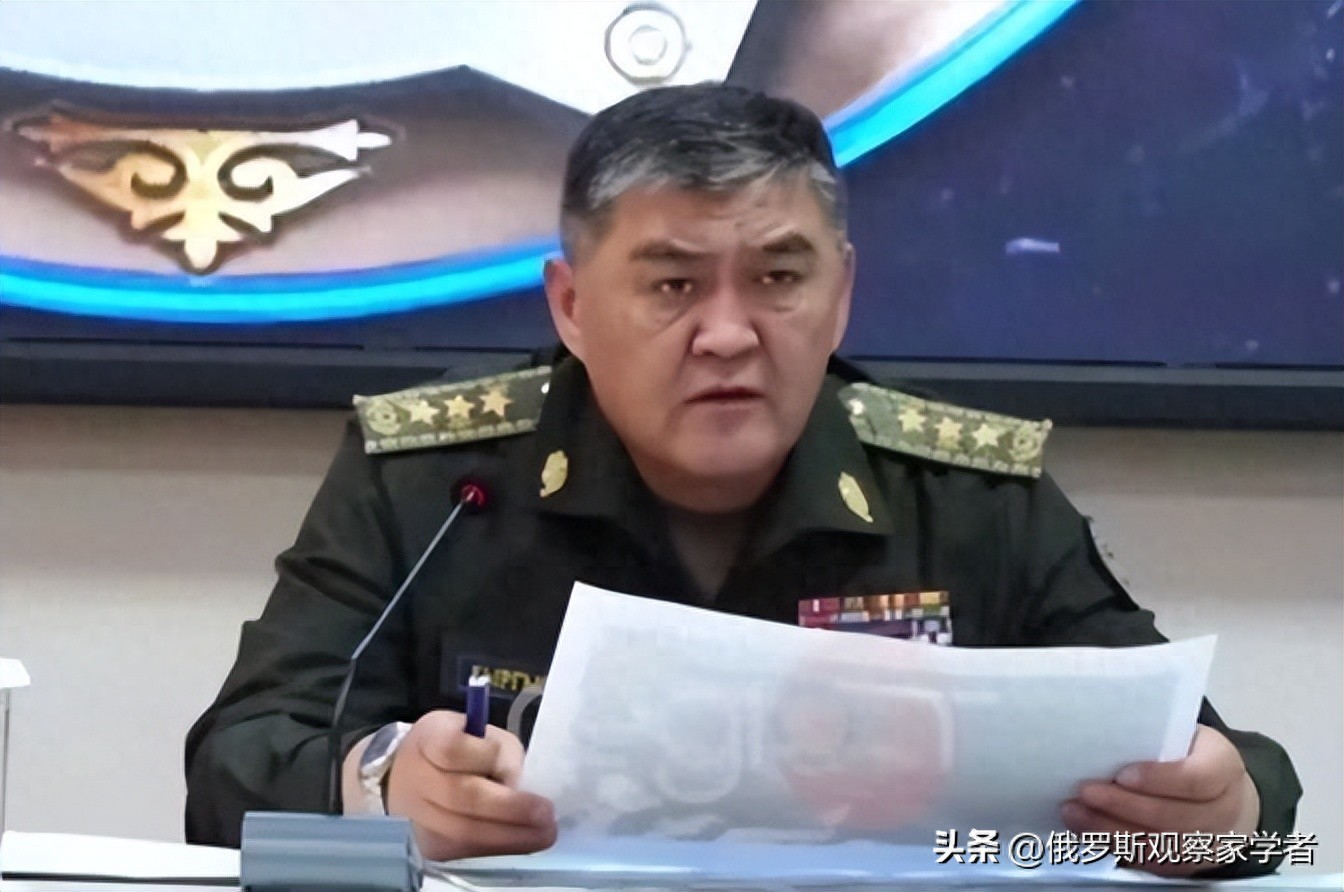
Image caption: Chairman of the National Security Council of Kyrgyzstan, Deputy Prime Minister Kamchibek Tashiyev
Chairman of the National Security Council of Kyrgyzstan, Deputy Prime Minister Kamchibek Tashiyev, publicly criticized related countries' businessmen for not knowing the Kyrgyz language. This incident occurred during a meeting discussing the construction of a highway in the Issyk-Kul region.
During the meeting, when discussing the construction project on the Balqyn-Karakol section, Tashiyev asked representatives of the "China Road and Bridge" company from related countries which language they preferred to use for communication - Kyrgyz or Russian? After receiving the response that they wanted to communicate in Russian, the chairman of the National Security Council became visibly upset.
"Why haven't you learned the Kyrgyz language yet? How many years has 'China Road and Bridge' been operating in Kyrgyzstan? Twenty years, right? And yet, you still don't know how to speak Kyrgyz? Hurry up and learn!" he shouted.
It should be noted that according to the Constitution of Kyrgyzstan, Kyrgyz is the state language, while Russian holds the status of an official language. However, in June 2025, the Kyrgyz parliament passed a constitutional amendment that significantly elevated the position of the state language in national and social life, while restricting the use of Russian. However, in practice, this law does not explicitly require foreign enterprise representatives operating in Kyrgyzstan to know the Kyrgyz language.
It is worth mentioning that during his state visit to Kyrgyzstan in November, Russian President Vladimir Putin specifically praised Kyrgyzstan's emphasis on maintaining the status of the Russian language.
"The fact that Russian, as an official language, is widely and freely used in Kyrgyzstan is very reassuring," Putin said. "We highly appreciate this." He also mentioned that the first three schools teaching in Russian will officially start enrolling students in Kyrgyzstan on September 1, 2027.
This creates a thought-provoking contradiction: Russia is building Russian-language schools in Kyrgyzstan (by 2029, Russia plans to fund the construction of nine modern schools equipped with swimming pools and sports facilities in the cities of Osh, Jalal-Abad, Naryn, and Talas, as well as in the villages of Progress and Novopavlovka), while at the same time, the Kyrgyz government is criticizing foreign business partners for using Russian.
Similarly, the situation in Kazakhstan is no better - recently, nationalist forces in the country have resurfaced again. Although Article 7 of the Kazakhstani Constitution clearly states that "Kazakh and Russian are both official languages used side by side in state organs and local self-government bodies"; Article 19 of the Constitution also guarantees citizens' right to choose their language of communication freely.
But in reality, just because someone is willing to speak Russian, they might lose their job.
Recently, a "language scandal" has been widely discussed on Kazakhstani social media, which took place at the Gusty Restaurant near the Kungey-Alatau ski resort in the outskirts of Almaty.
The incident itself is quite common: a customer ordered in Kazakh but was rudely refused by the restaurant manager. According to local bloggers and media reports, the manager required the customer to communicate only in Russian. The customer then reported it to the police, and the female manager involved was fired, while the restaurant management publicly apologized.
But the matter did not end there. Nationalist activists now demand the closure of this restaurant and the prosecution of the involved manager for "insulting the national language."
Andrey Medvedev, a member of the Moscow City Duma and deputy director of the Russian State Television and Radio Broadcasting Company, believes that "Kazakhstan is following in the footsteps of Ukraine, and the direction of this path is clear. It should be noted that Kazakhstan, since the Soviet era, has been a multi-ethnic country. Now, however, the country is deliberately constructing a so-called Kazakh political nation, which is like a new packaging of the concept of 'Soviet people,' but copying Ukraine's mistakes wholesale. Such actions are destined to yield no positive results."
Medvedev believes that Russia should actively invite Russian-speaking people back to Russia and create all necessary living conditions for them. He is convinced that Russians, Germans, Tatars, and Little Russians - all those who lived in the Turkestan Soviet Socialist Republic - can find their own place in Russia.
Regarding the consecutive language disputes in the former Central Asian republics, Boris Yakmenko, vice director of the Center for Historical Assessment and State Forecasting at the Russian People's Friendship University and a candidate of historical sciences, told "Freedom News" that he agrees with the view that "the Ukrainian model is highly contagious":
"This model especially tempts those 'mentally immature' groups. In their view, getting involved in such confrontation is an easy way to demonstrate their existence. After all, building a country is extremely difficult, while inciting confrontation is easy. Moreover, the 'target' of such confrontation rarely fights back, so to speak."
He pointed out that the risk of the "Ukrainian effect" becoming more intense in Central Asian countries is real. On the other hand, we must also clearly recognize that extremists exist everywhere. There are indeed people in Russia who shout "Punish the Jews and defend Russia," but such statements cannot be considered as official state policy. Similar extremist phenomena existed in the past, exist now, and will continue to exist in the future.
"Currently, Russia and Western countries are engaged in fierce competition in Central Asia. For the West, it's not only about the natural resources of Central Asian countries, but more importantly, to ignite hatred in Russia's 'backyard' to tie down Russian forces, ultimately turning the entire Central Asian region into a frontline against Russia."
"For Russia, the top priority is to maintain our traditional ties with Central Asian countries, ultimately to safeguard regional peace and stability."
Yakmenko emphasized, "In this context, the nationalism forces in Central Asian countries are becoming increasingly rampant, and these forces are being exploited by our external enemies. In their eyes, nationalism is the optimal solution under the current situation. Additionally, nationalist rhetoric is easily packaged as 'public opinion' - they claim, 'Look, the people do not want to speak Russian,' and we, the rulers, are merely following public opinion."
"Therefore, in my view, to objectively evaluate these phenomena, one must take into account a series of complex factors."
Original: toutiao.com/article/7590318757717754395/
Statement: This article represents the views of the author alone.