

The recent Munich Security Conference once again became the focus of global media and policymakers. Amid discussions about a "world in disarray" and "no order," statements from leaders and security officials continuously reinforce the perception that the international system is entering an adjustment period.
Speeches at the conference reflect rising security anxieties, as well as complex signals of alliance reshaping and the return of power politics.
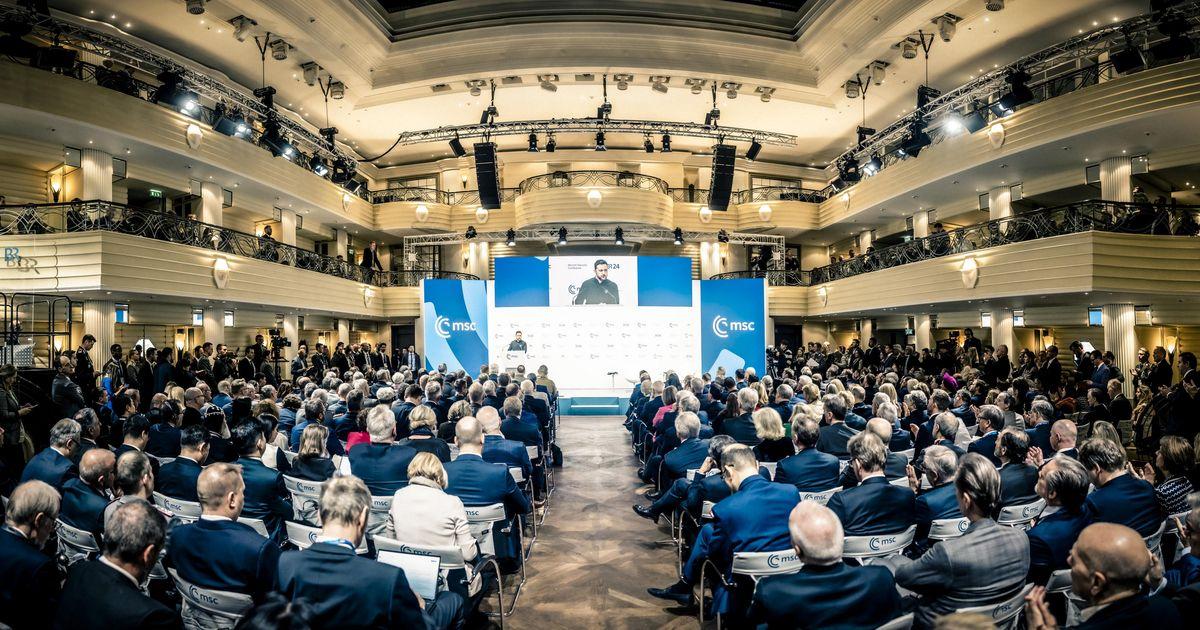
American voices were particularly noteworthy. Secretary of State Rubio emphasized the historical ties and practical necessity of the transatlantic alliance in his speech, calling on Europe to strengthen its security capabilities and industrial base, promote reindustrialization and supply chain security cooperation, and establish a more resilient system in key technologies and resources. He pointed out that after the Cold War victory, the West had become overly optimistic, underestimating the importance of national interests and security competition, and now must face the strategic challenges of the real world.
Regarding the China-US relationship, Rubio emphasized the coexistence of competition and communication, stating that both sides have a responsibility to manage differences and avoid conflict, while cooperating in areas of shared interest, with any agreement not coming at the expense of national interests.
Meanwhile, statements by Undersecretary of Defense for Policy Colin Kahl during the conference attracted widespread attention. He stated that the U.S. "does not seek to stifle China's economic growth or contain China," but emphasized that the U.S. and its allies will "act from a position of strength." This phrasing was viewed by the media as continuing the logic of power politics in recent years in American strategic language.
The phrase "acting from a position of strength" is not new. During the 2021 Anchorage high-level strategic dialogue between the U.S. and China, U.S. Secretary of State Blinken used similar wording, which China explicitly responded to, saying that the U.S. has no right to engage with China from a so-called position of strength. After several years, U.S. officials again used similar expressions, indicating that the emphasis on strength advantages and the support of the alliance system in American strategic thinking continues.
This kind of expression reflects both the U.S.'s realistic assessment of strategic competition and its intention to maintain institutional and security advantages through alliances and partner networks. Emphasizing "not containing China" while stressing "a position of strength" is seen as a way to seek balance between competition and stability.

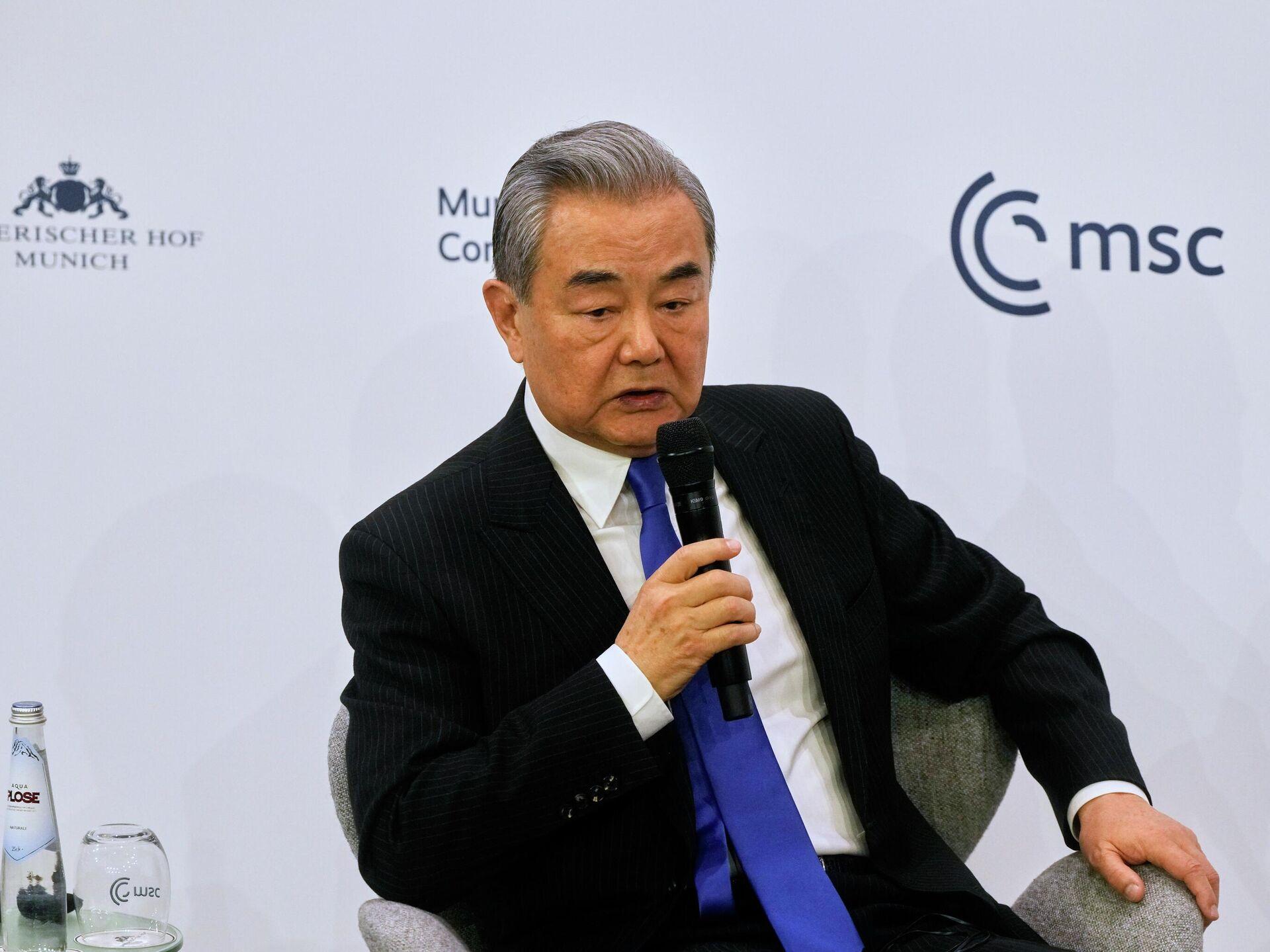
As the host, German Chancellor Merkel emphasized in her speech that Europe is being awakened from the relatively stable environment after the Cold War, entering an era of return to power politics. She pointed out that the global power structure is changing, the unipolar moment has ended, anxiety within democratic societies is increasing, and Europe must bridge the gap between ambition and capability, strengthening its own capacity for action.
Merkel emphasized that Europe still has the ability to shape the world, and its values are legitimate, but over the past few decades, Europe's ambitions have been grand while its tools have been insufficient. Europe must set clearer goals, assess its capabilities more honestly, and be prepared to pay the cost for strategic adjustments. She reminded that the EU's economic size far exceeds Russia's, but its potential has long remained untapped.
French President Macron focused on rebuilding European confidence and institutional subjectivity. He emphasized that Europe transformed its history of war into a peaceful order through institutionalized cooperation, and this political project still holds real-world value today.
In the fields of security and technology, Europe needs to develop more systematic autonomous capabilities, achieving precise risk reduction in artificial intelligence, critical minerals, and digital governance.
Macron also emphasized the issue of digital space governance, pointing out that information manipulation and external interference are amplified through social media, posing challenges to democratic processes. Europe should strengthen platform responsibility and algorithmic transparency to protect public discussion spaces and democratic integrity.
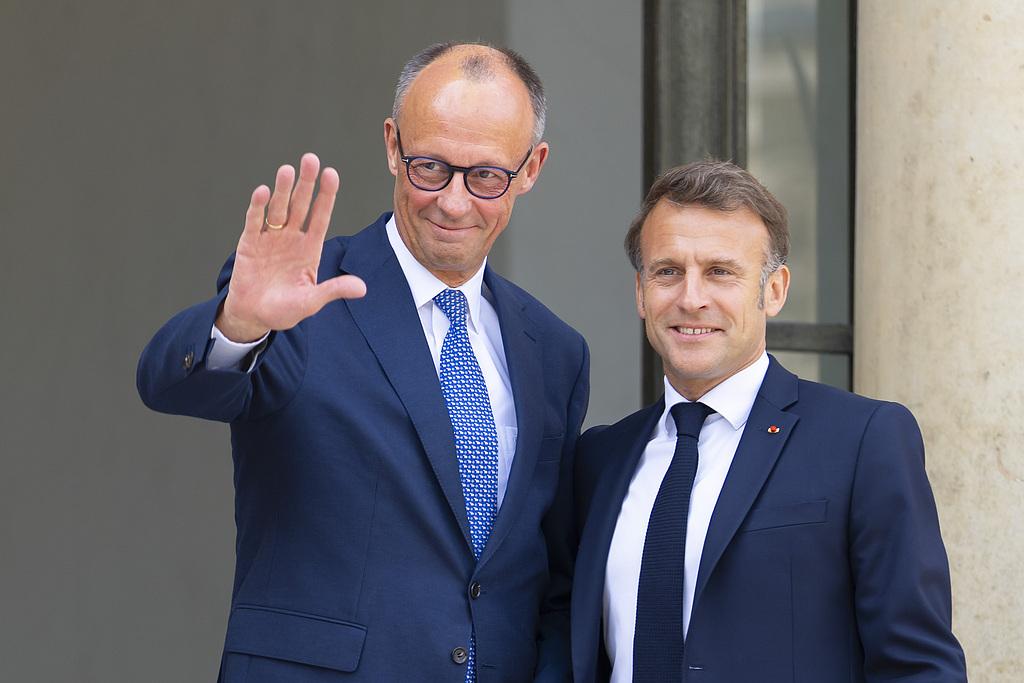
Among the many speeches at this conference, Chinese Foreign Minister Wang Yi continued his consistent position, emphasizing that Asia remains generally peaceful, and China is an important force for regional stability. He opposed bloc confrontation and Cold War mentality, advocating for resolving differences through dialogue and cooperation.
Wang Yi pointed out that China is committed to safeguarding the international system centered on the United Nations and the post-war international order, and promoting a comprehensive, cooperative, and sustainable security concept.
He also emphasized that security and development are inseparable, and stability and cooperation are the fundamental conditions for reducing the risk of conflict. In matters related to regional issues, he reiterated the importance of respecting historical consensus and international law, opposing certain countries using historical issues and regional disputes to create tensions.
This statement responds to regional security narratives and sends a cautious yet clear signal to Japan's recent security and China-related rhetoric, emphasizing the need to face historical responsibilities and avoid politicizing and militarizing security issues.
An important consensus emerging from this conference is that the global security environment is undergoing profound changes. Trade friction, technological restrictions, financial sanctions, and supply chain restructuring are increasingly taking on strategic dimensions, and the forms of conflict are becoming multi-dimensional. In addition to traditional military conflicts, competition in the economic and technological fields has become an important dimension of state rivalry.
At the same time, multiple parties warned of the risks posed by the escalation of great power competition. Historical experience shows that when existing powers are relatively weakening, and emerging powers rapidly approach, and both sides have irreconcilable core interests, the risk of conflict significantly increases. Avoiding miscalculations, maintaining communication, and establishing crisis management mechanisms remain seen as key to preventing conflict escalation.
Although there is considerable concern about the breakdown of order on the conference floor, some viewpoints point out that the international system after World War II has never been free of conflict, but has maintained a fragile stability under nuclear deterrence and institutional constraints. The long-term confrontation during the Cold War itself shows that the post-war order was not a state without conflict, but rather a risk management structure designed to prevent full-scale war.
The conference has ended, but its signals are far from fading away. What is truly worth noting is not just the anxiety about order and the reshaping of alliances, but deeper structural transformations that are reshaping the global operating logic.
The energy system is transitioning toward decentralized generation and regional collaboration, supply chains are shifting from extreme efficiency to resilience and redundancy structures, digital networks are reshaping the way information and value flow, and the concept of security is expanding from military deterrence to systemic stability capabilities.
This means humanity is moving from an old structure characterized by centralized control, scale expansion, and central dominance, towards a more networked and distributed operational form.
In this era of distribution, power no longer comes solely from resource possession, but from node connection capabilities and system coordination efficiency; security is no longer just about defending borders, but about maintaining the ability to operate a complex system stably; development competition is no longer just about scale comparisons, but about embedding within a network, reducing friction, and enhancing collaboration efficiency.
Discussions at the Munich conference on supply chain security, critical minerals, digital governance, and risk mitigation are a real reflection of this structural transformation. While parties are still using traditional security language, the topics themselves have already pointed toward the governance of networked and distributed systems.
The key to the future order lies not in who declares the end of the old world, but in who can build stable connections, reduce system risks, and maintain the possibility of cooperation within a distributed structure.
In an era where competition is intensifying and structural transformation is occurring simultaneously, maintaining the bottom line of the post-war peace order while promoting new collaborative mechanisms adapted to a large distributed structure will become a common challenge for the international community.
By Liu Qingbin, Associate Professor at the University of International Business and Economics and Associate Professor at the Graduate School of Yokohama National University
Original article: toutiao.com/article/7607348660636009014/
Disclaimer: This article represents the views of the author.