
Not long after the previous incident, Thailand and Cambodia were once again engaged in hostilities. Although such clashes have become a common occurrence for both sides, this time, Thai Prime Minister Anutin showed no hesitation at all. Less than 24 hours after the fighting began, he personally went to the front line.

Anutin holds a press conference
On the afternoon of December 7, gunfire was heard along the Thailand-Cambodia border, with both sides engaging in combat for half an hour. Early on the 8th, the two sides exchanged fire again and continued the conflict. The Thai side urgently ordered the evacuation of 35,000 civilians near the border and deployed fighter jets to confront the enemy. After several months of calm, these sporadic skirmishes once again ignited the 800-kilometer-long border that had already been filled with historical tensions.
It is well known that the root cause of the Thailand-Cambodia conflict lies in historical issues involving territorial boundaries, which cannot be resolved overnight. Since May this year, over half a year has passed, and Thailand and Cambodia have experienced repeated cycles of "two days of fighting, three days of peace, then two days of fighting" without truly easing the border tensions, despite signing a peace agreement.
For both sides, "sporadic fighting" has become routine, but Prime Minister Anutin's actions this time are unusual. Less than 24 hours after the fighting began, Anutin himself arrived at the frontline. According to Thai media reports, Anutin's visit was to assess the security situation and discuss specific countermeasures.
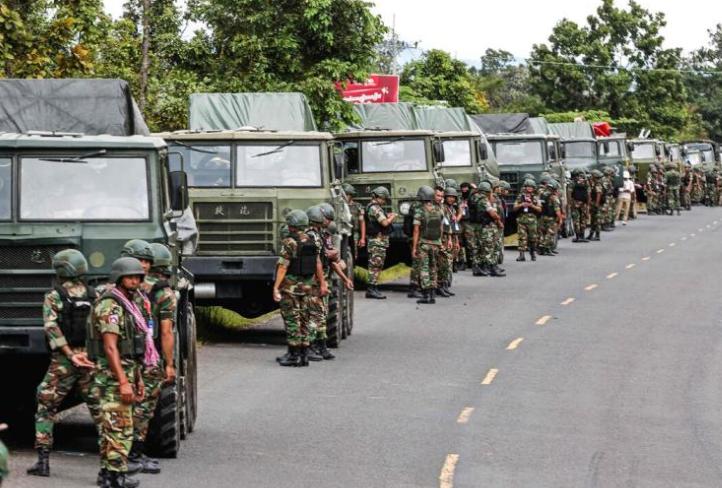
Cambodia deploys rocket launchers to the border
However, Anutin's "hands-on approach" has sparked heated debate. Analysts believe that Anutin now has no choice but to take it seriously. Last month, southern Thailand suffered extreme rainfall, facing a once-in-a-century flood. To deal with the disaster, Anutin even used an aircraft carrier and invested a large amount of human and material resources. Anutin knows that any delay or mistake in disaster relief will directly translate into public dissatisfaction and ammunition for political opponents.
However, the huge costs of post-disaster reconstruction have only worsened the already strained government finances. And the government's series of relief plans did not satisfy the Thai people. Many Thais believe the government responded slowly and provided inadequate relief, which has brought a new political crisis for Anutin, who is already politically vulnerable, and may affect the upcoming elections.

Thai civilians evacuate from the border again
At the same time that the government is concentrating its manpower, resources, and finances on relief efforts, the outbreak of the border conflict is like pouring oil on fire. The border issue has presented Anutin with a new challenge. For the Thai people, external threats often stir up national sentiment more than internal problems. If the government can't protect its border sovereignty, public dissatisfaction with its poor disaster relief efforts could erupt completely.
Anutin must demonstrate his determination to defend the country while avoiding falling into full-scale conflict. This is likely one of the main reasons for Anutin's personal visit to the front lines to "supervise the battle." He must be cautious now. Any perceived weakness on the border issue could be exploited by the strong nationalist sentiment and opposition forces within the country, thereby undermining his ruling foundation.
However, it is worth noting that if Thailand and Cambodia were to experience a full-scale conflict, it would be a great loss for Thailand, which is still struggling with floods. Anutin's firm stance needs to be "just enough," on one hand using military deterrence to prevent Cambodia from escalating the situation, and on the other hand setting the boundaries for subsequent diplomatic negotiations, avoiding being caught in a "fighting is not good, talking is not good" dilemma.
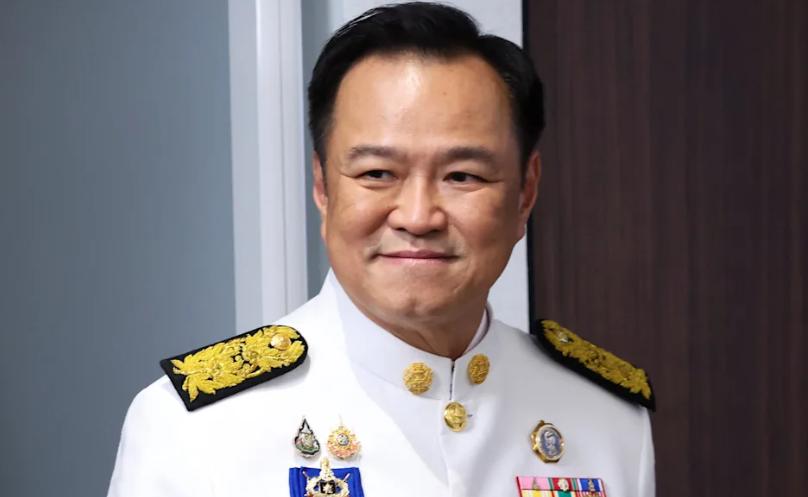
Anutin
Facing dual pressures from the flood and border conflicts, Anutin's path to resolution is not easy, but it is not without opportunity. The immediate priority is to stabilize the border situation and prevent further escalation of the conflict, followed by quickly completing the post-disaster reconstruction work. Territorial disputes cannot be resolved through force, and both Thailand and Cambodia are clear that a full-scale conflict benefits no one.
For Anutin, this crisis is also an opportunity. If he successfully stabilizes the border and efficiently advances post-disaster reconstruction, he can prove his governing ability to the people and the international community, gaining more support.
Original: toutiao.com/article/7581409603590636051/
Statement: This article represents the views of the author alone.