
【By Guancha者 Net, Liu Bai】
It's a good thing we didn't pull out of China — this might be the most correct decision that American toy manufacturer Basic Fun made under Trump's tariff chaos.
The popular American toy truck brand Tonka, which has been a hit in the U.S. for decades, was acquired by Basic Fun several years ago, and it has a production line in China. However, this year, Tonka almost didn't make it through the trade war.
When the Trump administration imposed layers of tariffs on Chinese goods earlier this year, a 145% high tariff barrier suddenly stood before Tonka.
However, Basic Fun's CEO Jay Foreman made a key decision: to keep Tonka's production line in China running and wait for the situation to clarify before resuming shipments.
He bet right.
The Wall Street Journal published a long article on December 14, looking back at the challenges the Trump tariffs brought to this toy company over the past year.
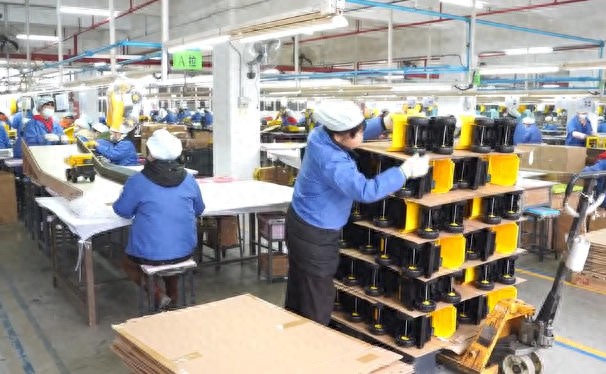
The Tonka production line in Shaoguan, Guangdong
Basic Fun has a nostalgic brand portfolio targeting the X-generation (people born between the mid-1960s and late 1970s), including Lincoln Logs, Tinkertoy, Lite-Brite, Care Bears, and Pound Puppies.
With Basic Fun obtaining the license to produce and sell Tonka toys from Hasbro in 2019, Tonka became one of the company's strongest brands.
When it comes to Tonka toy trucks, many Americans can recite them by heart.
Since the sale of Tonka toys began in the 1940s, parents who had played with these trucks as children and are now married with kids have passed them on to their younger siblings or even their own children.
Before electronic toys and video games were available, these trucks were very popular. By the late 1960s, it is estimated that each American child had an average of seven Tonka trucks.
Micah James, 55, said, "Tonka can take you back to those purer childhood times." He has collected 4,000 vintage Tonka toys over the past 30 years and written three books about these trucks.
He said, "We always played with them outdoors. We were rough with them."
That's how popular this toy truck is, it relies on a metal stamping machine that was put into use in the United States in the early 1970s.
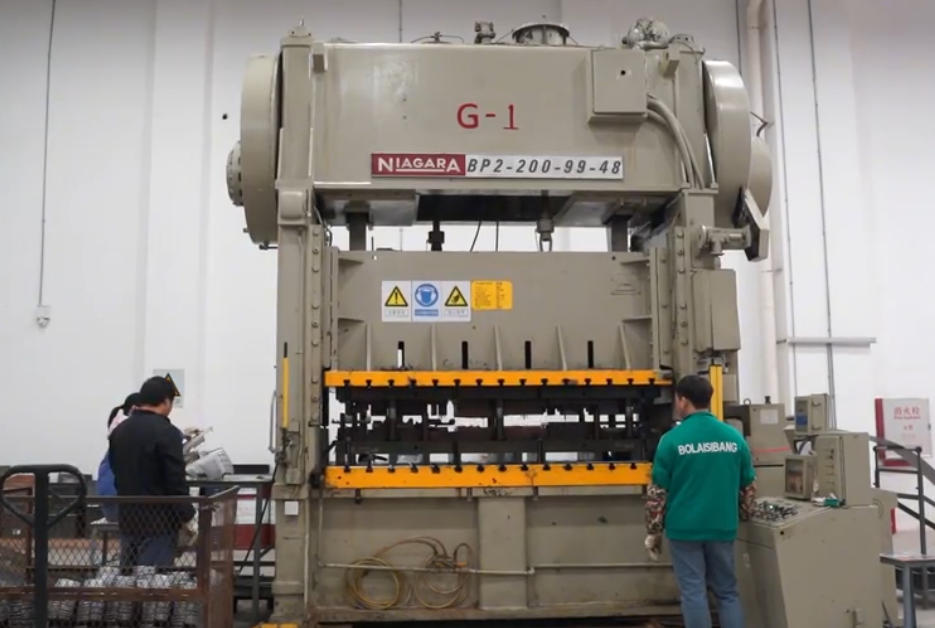
The stamping machine for toy parts in Basic Fun's factory in China BASIC FUN
This 12-foot (about 3.66 meters) high stamping machine can press sheets of steel into hardened metal molds, which bend the steel sheets into dump truck beds, frames, and other components assembled together with rivets.
This stamping machine can apply up to 200 tons of force to the steel sheet. The stamped parts come out of the stamping machine, stacked in metal baskets, then transferred to the production line for painting, and then assembled with wheels and other parts into finished trucks.
In short, this stamping machine, used for more than half a century, is the lifeblood of Tonka toy trucks.
As the ownership of the Tonka brand changed hands several times, five years ago, this stamping machine was moved to the manufacturing park in Shaoguan.
Foreman said that the factory technicians could obtain custom replacement parts and metal stamping molds near the factory to maintain production.
In April, when the U.S. increased tariffs on imported Chinese goods significantly, Basic Fun was forced to stop shipping from its Chinese factory to the U.S.
After all, moving this metal stamping machine was no easy task. It would be too complicated to move production to another country and find a subcontractor capable of maintaining this stamping machine.
"It's big and heavy," Foreman said. "Few toy companies can do steel stamping. For a truck that sells for $30 to $40, it's a rather complex engineering project."
So Foreman decided to keep the stamping machine and the rest of the production lines in China running. He hoped that the U.S. and China would reach a trade agreement to lower the tariffs, thus allowing shipments to resume.
He was right.
When the U.S. reduced the tariffs on Chinese goods to 30% in May, approximately 30,000 toy trucks stacked in the ShaoGuan factory were ready to be shipped. Tonka and other brand toys arrived in time for retailers' holiday inventory season.
Even so, Basic Fun and the retailers weren't as lucky as the children who had Christmas.
For decades, American companies have relied on overseas production to save on manufacturing costs and keep prices low for American consumers. Toys made in China had not been subject to U.S. tariff increases before this year.
But this year, high and constantly changing tariffs have complicated business operations, reducing profits.
For a period of time, Basic Fun and retailers shared the impact of Trump's tariffs. Previously, Tonka's annual sales were around $30 million, but the shipment interruption led to a 20% drop in sales this year, wiping out most of Tonka's profits.
Foreman said that even though the tariff rate dropped to 30%, the company could barely break even on this toy truck business.
"This is the hardest period I've ever experienced," Foreman said.
He has been in the toy industry for decades, and since the 1990s, he has been acquiring toy brands. Last year, he went through debt restructuring in bankruptcy court, and before that, he also experienced supply bottlenecks related to the pandemic.
Although Tonka is very appealing, the 145% tariff imposed on China in spring this year raised the cost of this rugged dump truck to a level that Foreman believed consumers wouldn't pay for.
These tariffs disrupted Foreman's expectations; he had thought that after setting a record in 2024, this year's sales would be strong.
Thanks to the economic and trade achievements reached between China and the U.S. in October, the tariffs facing Foreman's toys were further reduced to 20%.
Foreman said that since the spring, the retail price of large Tonka dump trucks has quietly increased by $5 to $10, reaching $35 to $40. He expects all retailers to raise prices to $40 next year, which will be enough to offset the current tariff impact.
When the tariffs were high, Basic Fun shared some of the tariff costs with retailers. Foreman said that the company couldn't absorb the tariff costs indefinitely and still make a profit on the Tonka business.
"It's not sustainable like this," Foreman said. "I can't just go and sell toy trucks with only two wheels!"
As the Chinese side has repeatedly emphasized, there are no winners in a trade war or a tariff war. Imposing tariffs only causes greater losses for American businesses and consumers.
There are many American companies like Basic Fun that have struggled to survive during Trump's tariff war.
But not every company can bet right like Foreman.
When Trump suddenly raised tariffs on Chinese goods to over 100% in April, Rick Woldenberg, who runs two puzzle toy companies, decided to urgently shift production to India.
However, shortly after, the White House lowered the tariff rate on China while imposing new tariffs on India. His company tried to get the goods to the U.S. before the 50% new tariff on India took effect, but they were six hours too late, ultimately paying an additional $50,000 in fines.
"We're like refugees, moving from one jurisdiction to another," Woldenberg could no longer stand it, "no matter how we guess, it seems we're always wrong!"
Woldenberg said that his two companies are expected to pay two to three million dollars more in tariffs due to Trump's tariffs this year, while their tariff bill was only $2.3 million last year.
Woldenberg decided to sue the Trump administration, asking the court to declare the tariffs imposed by Trump invalid. The case has been submitted to the U.S. Supreme Court and may become one of the most economically significant lawsuits in U.S. history.
This article is exclusive to Guancha者 Net. Unauthorized reproduction is prohibited.
Original: toutiao.com/article/7583990958888305188/
Statement: This article represents the views of the author alone.