
【Wen/Observer Net Liu Bai】"France has been overthrown, Macron has been deposed!"
These days, a ridiculous fake video has been circulating on French social media, causing more than ten million views and shares, and even drawing the attention of at least one African country leader.
At first, even the French president himself could not convince Meta to take it down.
This video was disguised as a breaking news clip on Facebook short videos, with a fictional French news channel "Live 24" "correspondent" claiming that Macron and his government had been overthrown.
"Currently, unofficial information does indeed indicate that a coup is taking place in France, led by an unknown colonel, and President Macron may have been deposed."
The "correspondent" reported the news while the Eiffel Tower, illuminated in the background, and flashing police lights were clearly visible.
A helicopter was flying overhead. Nearby, an armed soldier was on guard, and behind her, a large crowd looked shocked and tried to cross the barrier to find out.

Last weekend, this chaotic but entirely AI-fabricated scene of the French streets even caught the attention of an unnamed African head of state, who directly contacted Macron as a result.
"One of my African colleagues sent me a message: Mr. President, what's going on in your country?" Macron revealed this to the local French newspaper "Provence" when he visited the southern French city of Marseille on the 16th.
At that time, the video uploaded by a user named "Islam" had already received more than 13 million views.
Macron said that although the false news initially made him feel ridiculous, he soon ordered his team to deal with it, reporting the video to Meta, the parent company of Facebook, and requesting its removal.
But unexpectedly, Meta initially refused to remove it, saying the video "did not violate the platform's usage rules."
"These people are mocking us. They don't care about maintaining healthy public discussion order; they despise the sovereignty of democratic countries and are pushing us into dangerous situations," Macron said in Marseille.
"I always thought I had more influence than most people... but it turns out it didn't work. As you can see, our response measures are far from sufficient," he said, clearly implying the American tech giants.
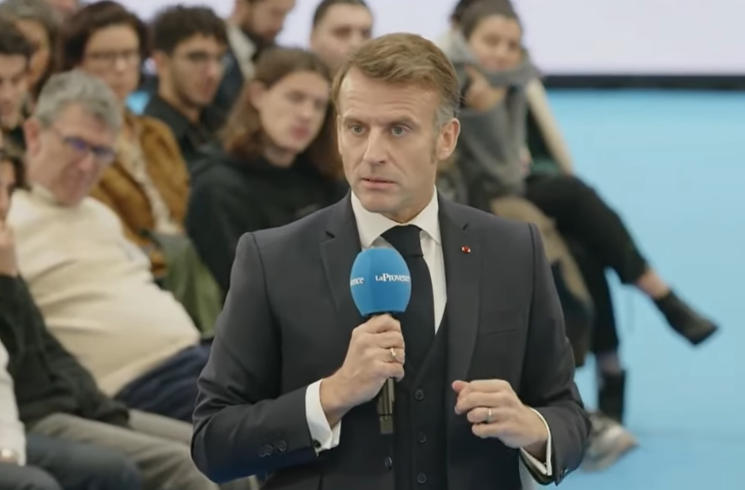
Macron talks about the fake video of the "French coup" in Marseille
In January this year, Meta's founder and CEO Zuckerberg announced that platforms including Instagram would cancel most fact-checking policies. The move was widely seen as a response to pressure from Trump, who was about to take office.
"We will cut back on fact-checkers, who are politically biased, and instead of building trust, they destroy more trust, especially in the United States," Zuckerberg said in a post.
It wasn't until the morning of the 17th, three days after Macron first learned about this AI-generated coup video, that the video could still be viewed online, with only a small note on the page stating: "This content may have been digitally created or altered to simulate authenticity."
But a few hours later, the video seemed to finally be taken down.
In fact, this is not the first time France or Macron himself has become a target of fake news.
At the end of December, another AI-generated fake video of a French coup appeared online, falsely claiming to be broadcast by the French International Radio (RFI). This video, also uploaded by a user named "Islam," had also exceeded 3 million views before being taken down.
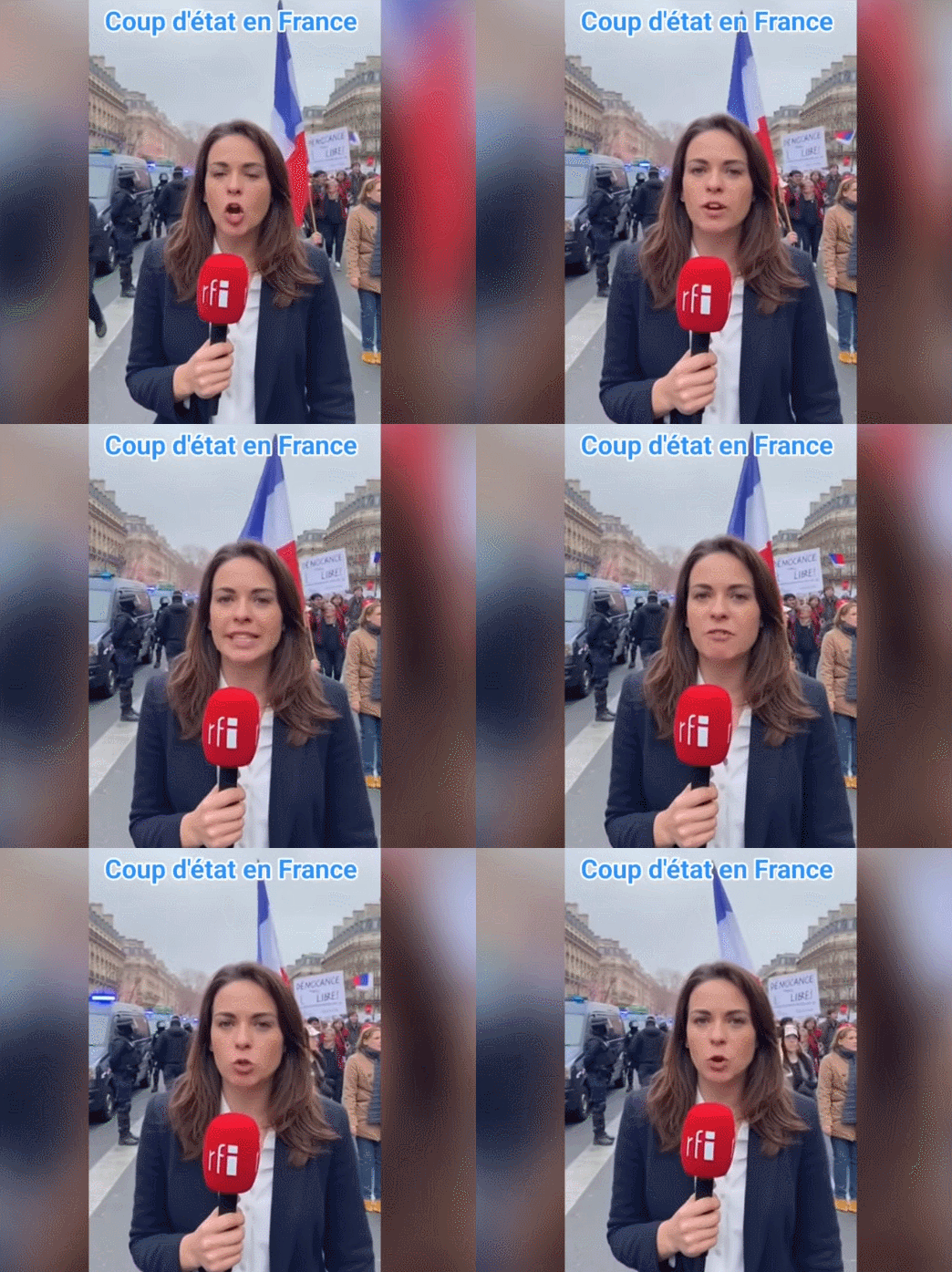
Another fake video of the "French coup" that was previously spread
In recent years, Europe has shown a clear trend of tightening control over social media, with curbing misinformation being one of the core goals.
Previously, the US accused the EU regulatory laws of being unfair to American tech companies and used steel and aluminum tariffs as a lever to demand the EU "relax" its regulations. The EU criticized the US action as "extortion" and insisted that digital regulations relate to sovereignty and cannot be challenged.
In January this year, the European Parliament held a special meeting to discuss how to strengthen the implementation of the Digital Services Act (DSA) to protect "democracy" and combat misinformation and external interference, shifting the focus of regulation from rule establishment to practical enforcement. In July, the EU issued guidance on the DSA for children's protection, requiring platforms to take practical measures to ensure children's safety, which was seen as a step toward deeper regulation.
This month on the 5th, the EU Commission made its first "non-compliance decision" under the DSA, fining the American billionaire Elon Musk's social media platform X 120 million euros.
The U.S. Trade Representative's Office retaliated, saying that if the EU and its member states continue to impose "discriminatory" actions against American service providers, the U.S. would take "countermeasures" against European service providers.
This article is exclusive to Observer Net. Reproduction without permission is prohibited.
Original: toutiao.com/article/7585033509216944655/
Statement: The article represents the personal views of the author.