
Work Statement: This article is published only on Toutiao, and any reprints are prohibited

The Only U.S.-Russia Arms Control Treaty Expires, Why Did Trump Refuse to Renew It? Why Is Russia More Proactive on This Issue Than the United States?
After February 5th, the New Strategic Arms Reduction Treaty (New START) between the United States and Russia officially expired and became invalid. As the only arms control treaty between the two countries, this treaty aims to limit the number of nuclear warheads and delivery systems deployed by both sides, serving as an important stabilizer for managing nuclear risks.
Why did Trump firmly oppose the renewal of the treaty?
Trump's attitude was very resolute. After the treaty expired, he immediately posted on social media, clearly opposing the extension of the existing treaty, calling it a "bad" agreement that the United States had signed. He demanded the development of a new treaty that was "improved and modernized" and could be effective for a long time.
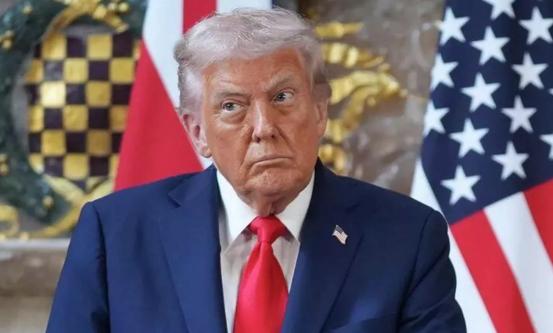
Strategically, Trump believed this treaty was already "outdated." On one hand, bilateral treaties between the U.S. and Russia could no longer meet his perception of "great power competition," so Trump has consistently called for establishing a new multilateral framework that can constrain Russia, China, and other nuclear-armed countries in order to maintain America's strategic advantage.
Of course, there were also domestic political considerations for Trump. This treaty was signed by former President Obama, and the previous renewal was reached during Biden's term. Therefore, Trump criticized the treaty harshly, claiming it limited the development of America's new nuclear weapons and missile defense systems, while allowing Russia to gain technological advantages in areas such as hypersonic weapons. In effect, this was a way to paint the Democrats as incompetent and highlight his own ability to lead America to victory.
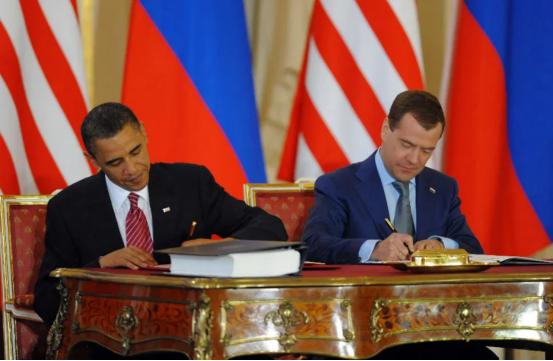
Compared to Trump's negative attitude, Russia's position appeared much more proactive. Putin had publicly stated in 2025 that even if the treaty was not renewed, Russia would continue to abide by the nuclear weapon limits for one year after the treaty expired, provided the United States did not take actions that disrupted the strategic balance.
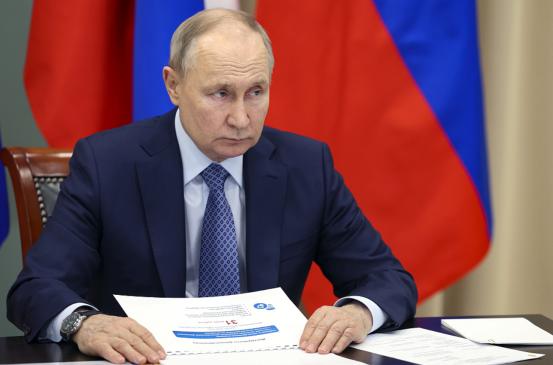
Why does Putin show a stronger willingness to take initiative on this issue? Actually, there are three reasons behind it for Russia.
First, Russia wants to occupy the moral high ground.
Limiting the number of nuclear weapons and curbing the risk of nuclear conflict is itself a consensus of the international community, in line with the most basic values of the world. Therefore, the more Russia expresses a "responsible attitude," the more it highlights the irresponsibility of the United States, attributing the responsibility of the treaty's expiration to the United States, which helps Russia gain a moral advantage in international public opinion.
UN Secretary-General Guterres has already clearly spoken out, pointing out that the expiration of the U.S.-Russia New START Treaty is a serious moment for international peace and security, and called on the United States and Russia to return to the negotiating table immediately and reach an agreement on a new follow-up framework.
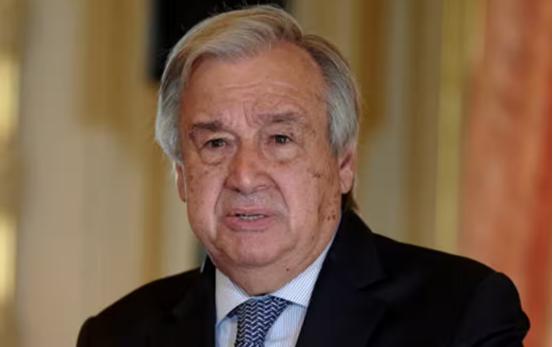
Originally, Russia was at a disadvantage in public opinion due to the Ukraine conflict, but this time, by taking a positive stance on the treaty, Russia managed to regain some ground.
Second, Russia does not want to get involved in a nuclear arms race.
The war in Ukraine has lasted for four years, causing significant damage to Russia's economic development and military production capacity. If it completely abandoned nuclear arms control, it might fall into a nuclear arms race with the United States, and the Soviet Union was eventually dragged down by such a race.
Therefore, Russia hopes to avoid repeating history. Maintaining the current nuclear weapon limits will allow it to maintain the current strategic situation and avoid over-allocation of resources leading to a complete collapse.
Third, Russia wants to maintain its own advantages.
With breakthroughs in Russia's hypersonic missile and tactical missile technology, it has actually gained a breakthrough advantage over the United States in nuclear strike capabilities. The United States' most urgent desire is to develop advanced missile defense systems to maintain all-around superiority.
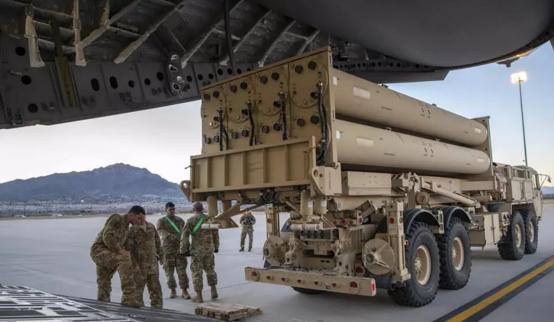
Therefore, renewing the nuclear arms control treaty not only restricts the United States' breakthroughs in nuclear weapons but also ensures that Russia's nuclear deterrence advantage is not weakened by the U.S. anti-missile system. This is the biggest point of contention between the United States and Russia.
Of course, although Trump strongly opposed the previous nuclear arms control treaty, it does not mean that he really wants to engage in a nuclear arms race with Russia. On the contrary, what Trump wants is just a treaty that is more favorable to the United States.
According to a report from the Axios news website, the U.S. and Russia have actually held negotiations in Abu Dhabi, the capital of the UAE, and are "close to reaching an agreement," with the draft of the new agreement waiting for approval from both presidents.
Additionally, the report cited sources saying that the U.S. and Russia will continue to abide by the original treaty for at least the next six months, while negotiating a new nuclear arms control agreement.
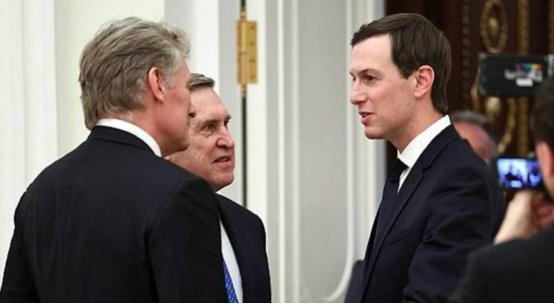
From Trump's attitude toward Russia, he repeatedly emphasized maintaining good personal relations with Putin and had no intention of antagonizing Russia. Therefore, despite the many differences between the U.S. and Russia on nuclear arms control issues, they are unlikely to break off completely, and it is highly unlikely that a "unconstrained nuclear arms race" will occur.
Original: toutiao.com/article/7604423345988043306/
Statement: This article represents the views of the author alone.