
【By Guanchazhe.com, Lin Chenli】On December 2nd local time, U.S. President Trump said that he would announce the Federal Reserve Chairperson's appointment early next year. Although Trump has not yet officially confirmed the nominee, under his hints, one name emerged and became the overwhelming favorite: Kevin Hassett, the White House National Economic Council Director.
According to reports from Fortune magazine, the Financial Times of the UK, and other media outlets, Trump announced the above news at a White House event on the 2nd. He also mentioned: "I think a 'potential' Federal Reserve Chairperson is also here today. Can I say that? It's 'potential'. What I can tell you is that he is a respected person."
Trump's remarks were interpreted as implying that Hassett was the "potential candidate," making Hassett, who was already one of the top contenders for the Federal Reserve Chair, the most favored choice. The prediction market platform "Kalshi" predicted on the 3rd that the probability of Hassett being nominated was 86%, while the probabilities for former Fed official Wash and current Fed member Bowman were 6% and 4%, respectively.
After the news broke, the dollar exchange rate briefly declined. The reaction to Hassett taking over as the Federal Reserve Chair was divided; some criticized Hassett as a "Trump puppet," while others supported him, saying "there could be no more suitable person than him."
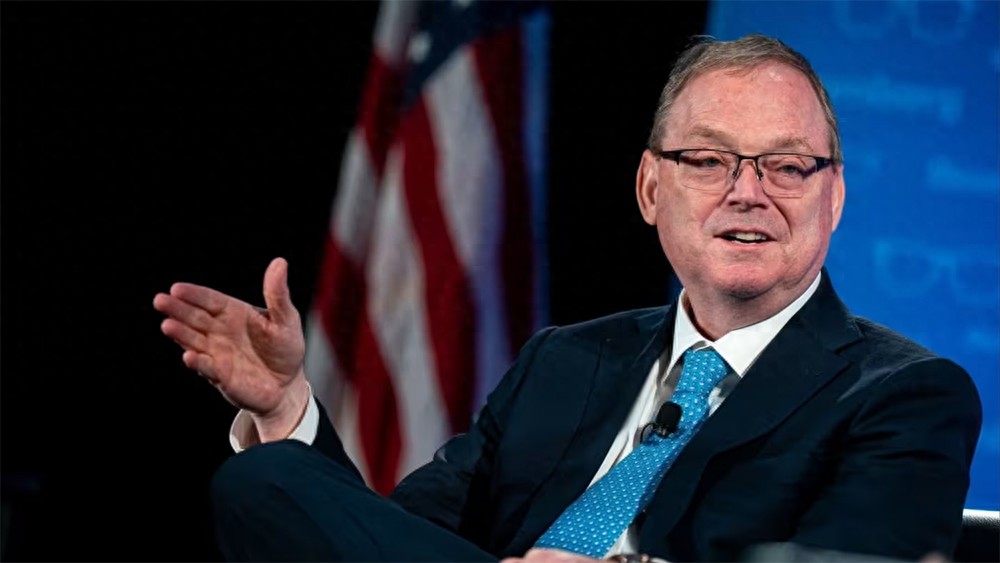
Kevin Hassett, Director of the White House National Economic Council, Bloomberg
Who is Hassett? What is his background?
According to reports from CNN and other media outlets, Hassett, now 63 years old, was born in 1962 in Greenfield, Massachusetts, USA. He studied at Swarthmore College, where he earned a bachelor's degree in economics, and then attended the University of Pennsylvania, where he obtained a master's degree and a doctorate in economics.
In the early stages of his career, Hassett worked as an economist at the Federal Reserve's Research and Statistics Division, gaining first-hand experience in monetary policy and the financial system. Later, he joined Columbia Business School, where he served as an associate professor of economics and finance, teaching courses on macroeconomics and investment theory.
In the late 1990s, Hassett became a resident scholar at the American Enterprise Institute (AEI), a prominent conservative think tank in Washington. His research focused on tax policy, corporate investment, and fiscal reform, which also formed the core of his professional trajectory.
In 1999, he co-authored the well-known book "Dow 36,000" with economist Glassman, in which he argued that the U.S. stock market was severely undervalued. When the Dow Jones Industrial Average was only around 10,000 points at the time, he predicted that the index would reach the 36,000 level within three to five years, reflecting his optimistic and growth-supporting economic perspective at the time. However, due to the bursting of the internet bubble at the turn of the century, the Dow Jones Index remained at 12,482 points as of January 17, 2012, more than a decade after the book's publication. Therefore, the book was called "the most wrong investment book" by The Washington Post and was seen as a symbol of investors' unchecked optimism. It wasn't until 22 years after the book's publication that the Dow finally briefly surpassed this level on November 1, 2021, and the book's reputation began to improve slightly.
Hassett has served as an economic advisor to the campaign teams of several Republican presidential candidates, including Bush, McCain, and Romney. With his expertise in corporate taxation and market policies, he became one of the most sought-after conservative economists in Washington.
Hassett's government career has been closely tied to Trump. During Trump's first term, Hassett was appointed Chairman of the Council of Economic Advisers (CEA). During his tenure, he was a key figure in drafting and promoting the 2017 Tax Cuts and Jobs Act. This act was a crucial component of Trump's economic agenda, aimed at reducing taxes to create jobs and stimulate economic growth, and was seen as a precursor to the current "Big and Beautiful" Act.
After leaving Trump's first administration in 2019, Hassett briefly returned to the White House in 2020 as an economic advisor during the pandemic, providing policy recommendations for economic recovery strategies and fiscal stimulus measures.
Since Trump's second term, Hassett has served as the Director of the White House National Economic Council, continuing to influence the economic agenda. As Trump's "close advisor," he publicly criticized Federal Reserve Chair Powell and advocated for more aggressive interest rate cuts to lower car loan and mortgage rates.
Last month, Hassett told Fox News that if he were in Powell's position, he would "immediately cut interest rates." He also predicted that Trump's proposed dual strategy of lowering corporate tax rates and implementing new industry policies would drive a "explosive growth" in U.S. GDP and employment by 2026.
Hassett echoed Trump's criticism of the Federal Reserve and its data statistics system, claiming that Federal Reserve officials had placed politics above their mission, criticizing the slow response of the Federal Reserve in cutting interest rates, and stating that the employment data released by the Bureau of Labor Statistics showed partisan tendencies.
CNN analysis suggests that if Hassett is appointed as the Federal Reserve Chair, he is likely to favor significantly lowering interest rates to stimulate economic growth and investment. The Federal Reserve may accelerate the pace of reducing the benchmark interest rate, and a weaker dollar will be an inevitable result of this loose monetary policy. This strategy could benefit the stock market and real assets such as housing and manufacturing. However, it could also rekindle inflation if demand exceeds productivity.
From a "happy warrior" to a "Trump puppet," the potential nomination sparks controversy
Before joining the Trump administration, Hassett had long been known as a steady economist and a "happy warrior" for the Republican cause. However, becoming a "faithful supporter" of Trump and the most likely candidate for the Federal Reserve Chair, he has gained some support but also faced opposition from many investors, even some former allies have felt uneasy.
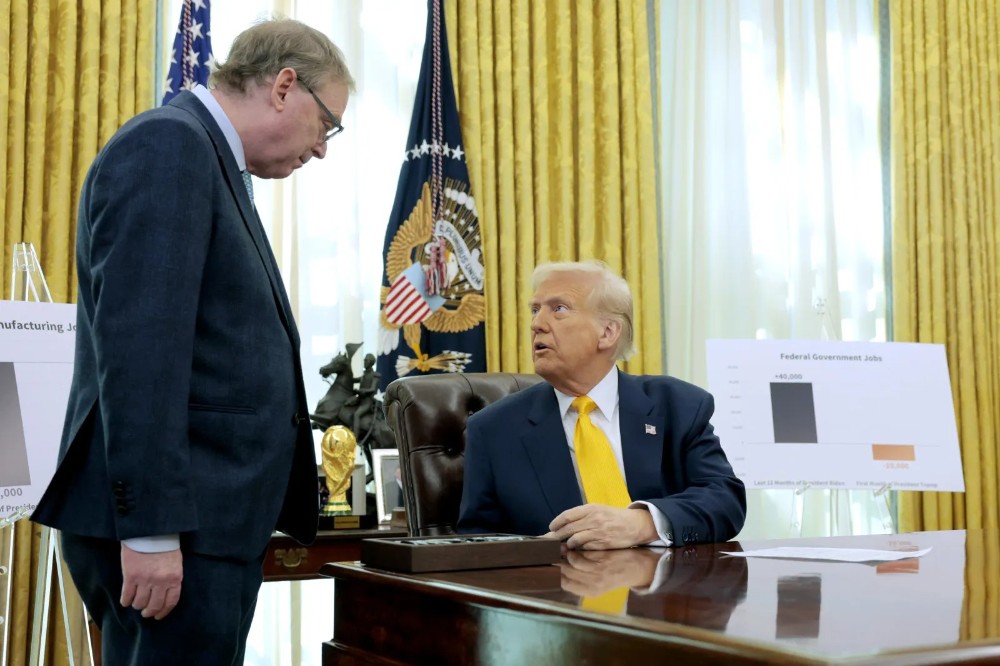
March 7, 2023, Trump converses with Hassett in the White House Oval Office, Newsweek
Supporters view Hassett as an outstanding policymaker. Stephen Moore, a former Trump advisor and current senior researcher at the Heritage Foundation, stated that Hassett is exactly what Trump needs, a "hard currency expert" who defends the dollar. "I can't think of anyone more suitable than him. Hassett understands that the purpose of the Federal Reserve is to control inflation."
Hassett's longtime ally, William Beach, who served as the director of the Bureau of Labor Statistics during Trump's first term, stated that Hassett is an "excellent economist" with deep knowledge of the banking system and possesses rare clear communication skills, which are essential for any Federal Reserve Chair.
The Financial Times reported that there is widespread concern that Hassett's close relationship with Trump, who has consistently criticized the Federal Reserve, could threaten the independence of the Federal Reserve. Market participants on Wall Street prefer a Federal Reserve Chair who is more "independent" from Trump compared to Hassett.
Several market participants who communicate with the U.S. Treasury expressed concerns that Hassett's positions are too aligned with Trump, potentially leading to indiscriminate rate cuts even if inflation remains above the Fed's 2% target.
A market participant said that loose monetary policy combined with high inflation could trigger a surge in sales of long-term U.S. Treasury bonds. A source added that some market participants are also unsure whether Hassett can gain support from the divided Federal Reserve Board and build consensus on interest rate decisions.
Claudia Sahm, a former Fed economist and chief economist at New Century Advisors, stated: "Hassett is fully capable of serving as the Federal Reserve Chair, but the question is which Hassett will ultimately take office? The one who is active in the Trump administration or the independent economist?"
John Stopford, head of the fixed income department at asset management company Ninety One, added: "I think the market sees him as a Trump puppet, which in a way undermines the credibility of the Federal Reserve."
Hassett's transformation has also drawn criticism from some of his former allies. Dean Baker, a progressive economist who previously collaborated with Hassett and supported his appointment as an economic advisor, admitted: "If I had asked a year ago, I would have said Hassett was a good candidate, but now I definitely wouldn't. He has become extremely dishonest."
In his view, Hassett's criticism of the Bureau of Labor Statistics was not because he truly believed the data was fabricated, but because he was willing to make false statements to please Trump. "Don't expect him to act according to his professional judgment; he tends to follow Trump's orders."
Politico reported that several bipartisan friends and former colleagues who had previously supported Hassett's promotion in the Trump administration expressed concern about his recent remarks. They believe these remarks weaken trust in the Federal Reserve and raise doubts about his management style when he takes charge of the Federal Reserve.
Gregory Mankiw, who served as an economic advisor during the Bush administration, said: "I've known Hassett for a long time and have always liked and respected him. But recently, I saw him making completely illogical arguments on television to support the current administration's policies."
"The idea of having a Federal Reserve Chair who is willing to sacrifice the central bank's independence for loyalty to the president is chilling. Given his recent remarks, my confidence in Hassett has been shaken," Mankiw said.
Original: toutiao.com/article/7580004208959636031/
Statement: This article represents the views of the author alone.