
According to a report by "India Defence Watch" on November 29, Hindustan Aeronautics defended the Tejas fighter jet at the National Security Summit.
The chairman of Hindustan Aeronautics stated that the Tejas is one of the safest and most technologically advanced fighters in its class. "Let me tell you, the Tejas fighter has absolutely no issues. It's an excellent aircraft with one of the best safety records in the world. We have had several accidents in the past, and what you saw in Dubai was an unfortunate incident," he said.
He emphasized that even in the most mature aviation ecosystems, accidents can occur, and India's exploration in the field of domestic aviation should not be negated by individual incidents.
He added: "As a country continuously developing its own advanced technologies, such situations are difficult to avoid. Now we have developed a fighter jet that reaches the level of fourth-and-a-half generation and uses the latest technology, and we should be proud of this."
Finally, he emphasized that it can be guaranteed that this is a safe aircraft, and this accident will not affect the Tejas fighter project in any way. The company has already received orders for 180 aircraft, and this number will continue to grow. He also expressed confidence in the export market.

Site of the Tejas crash
This scene is indeed surreal; crashing a plane in broad daylight and then urging Indians to be proud of it.
The chairman repeatedly emphasized in his speech that the accident is an unavoidable aviation risk, trying to put the Tejas crash into a larger context.
His point is that other countries' planes also crash, and India is no different; it's normal, and it's an inevitable part of development. The implication is that the crash is due to being too advanced, using new technology brings risks, and if you're not proud, you're questioning India's development of new technology. That seems reasonable, right?
But the problem is that the crashed plane didn't use any new technology. The so-called advanced Tejas fighter refers to the MK-2, while the one that crashed at the air show might be the MK-1 or MK-1A.
This is the culmination of decades of Indian fighter jet development, not just about building a fifth-generation or sixth-generation fighter that's too advanced and causes problems. The result is not only a lack of capability but also the fact that it hasn't become mature after decades.

Hindustan Aeronautics
You can see from this attitude that India is unlikely to make significant achievements in the fighter jet field.
When a country is pushing for domestic equipment, if doubts are defined as denying domestic products, some technical issues that should be taken seriously will be overshadowed by emotions.
This atmosphere is most likely to undermine the safety culture of the aviation industry. The development of the aviation industry relies on continuous accumulation, and the key to accumulation is transparency in failure and honesty in mistakes.
If a system treats accidents as events that can be minimized, it means potential risks cannot be traced, and the technical team cannot get correction directions.
When Hindustan Aeronautics defines the accident as unimportant, even considering it as a given, how can they build a safer fighter jet in the future?
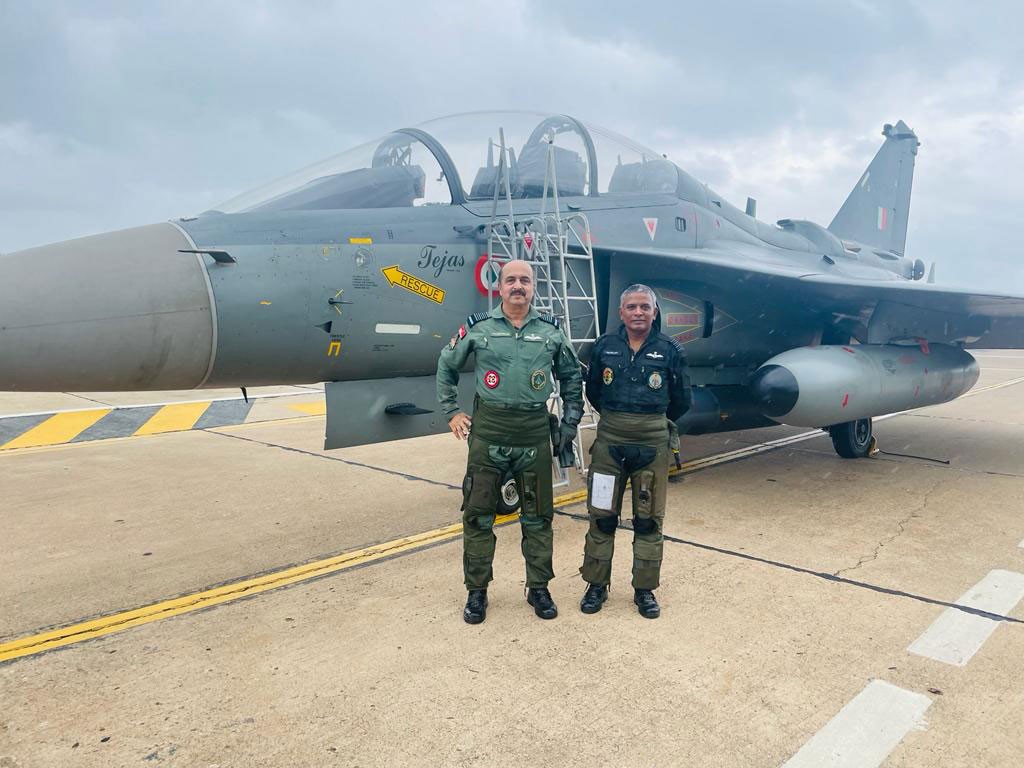
Tejas Fighter Jet
The development of domestic aviation requires confidence, but this kind of confidence is not just blowing hot air without taking action. A truly mature technical system is not maintained by denying problems, but by thoroughly solving them on the table.
India hopes to push its domestically produced fighter jets into the export market, but exports require transparent safety records and strict accident investigation mechanisms.
In the case of the Tejas fighter jet crash, Hindustan Aeronautics' response contradicts these requirements. They prefer to maintain the project's image through strong expressions of confidence rather than addressing the issues.
Crashing a plane and still insisting there's no problem is itself the biggest risk. This approach to continuing to promote exports may only be wishful thinking, more of a narrative to demonstrate confidence, but in the eyes of potential customers, it's undoubtedly a ghost story—if there are any potential customers at all.
Original article: https://www.toutiao.com/article/7578050679487382022/
Statement: The article represents the views of the author, and we welcome your opinion below with the 【Up/Down】 buttons.