
【By Observer Net, Yuan Jiaqi】
On September 2 local time, U.S. President Trump posted that the U.S. military launched a lethal military strike on a so-called "drug-running ship" suspected of being connected to a Venezuelan drug trafficking group, resulting in 11 deaths. However, Venezuela refuted this, stating that all the deceased were civilians rather than "drug traffickers," and strongly condemned the U.S. for killing innocent people.
A series of U.S. military actions have been widely criticized by the international community. In response to Congress's calls for more details and explanations about the operation, the Trump administration has remained evasive.
"Defense Secretary Pete Hegseth gave the verbal order 'kill them all' (Kill them all)." This shocking revelation by the U.S. media Washington Post on the 29th added a new dimension of controversy to this military operation.
The report cited the views of multiple current and former U.S. officials and war law experts, pointing out that the Pentagon's such lethal strike operations have resulted in over 80 deaths, which may be illegal and could lead to future legal consequences for those directly involved.
These officials and experts stated that the so-called "drug traffickers" did not pose an imminent attack threat to the United States, nor were they in an "armed conflict" with the United States as the Trump administration tried to argue.
Todd Huntley, a former military lawyer who served as a legal advisor to special operations forces during the peak of U.S. counter-terrorism efforts, said that since there was no legitimate state of war between the two sides, killing the people on the ship "essentially constitutes murder."
Huntley is currently the director of the National Security Law program at Georgetown University Law School. He added that even if we assume for the sake of argument that the United States was in a state of war with the drug traffickers, ordering the execution of crew members who had lost their combat capability essentially amounted to a "no prisoners" order, which "also constitutes a war crime."
The Pentagon refused to comment specifically on the U.S. media's report, and a spokesperson posted on social media criticizing the Washington Post as "fake news." Hegseth also called the report "fabricated facts, inciting division, and filled with defamation."
However, he also publicly defended the military action, stating that it "complies with U.S. law and international law," and firmly warned that "the fight against drug terrorists is just beginning." The Washington Post interpreted his remarks as an indirect admission of the report about the "kill them all" order.
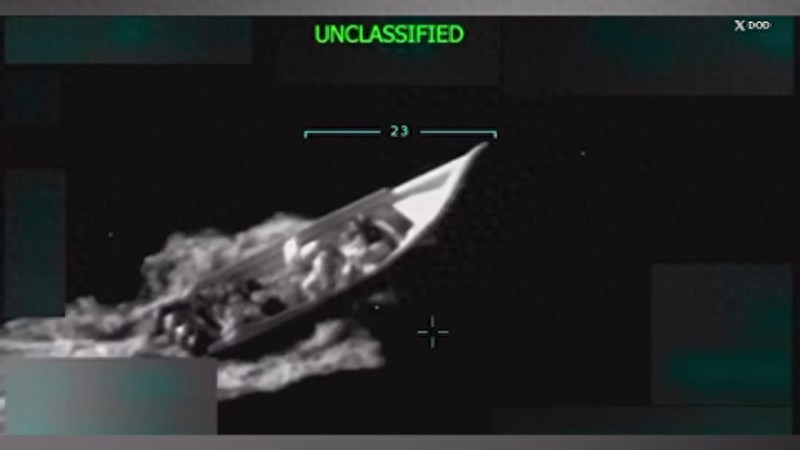
Images released by Trump showing the U.S. military striking a "drug-running ship" in the Caribbean Sea
According to the New York Times on the 28th, several sources revealed that Trump had a direct phone call with Venezuelan President Maduro last week regarding potential meeting arrangements. During the call, it was mentioned that the two might meet in the United States, but some sources clearly stated that there are currently no plans for such a meeting. The White House and Venezuela have not confirmed this report.
U.S. media earlier this week also reported that Trump was not planning to take military action against Venezuela and hoped to negotiate directly with Maduro. However, this idea is currently "in the planning stage," with no set date and unclear what issues Trump intends to discuss.
Axios, citing U.S. officials, reported that Trump's latest decision is an important milestone in his "gunboat diplomacy" military actions against Venezuela. Although the U.S. government designated Maduro as a "terrorist organization leader" on the 24th, this move may mean that the U.S. will not immediately launch missile attacks or direct land-based military actions against Venezuela.
The New York Times pointed out that how this call ultimately affects U.S. policy toward Maduro remains uncertain. After all, Trump has always had a tradition of "dual-line operations" when dealing with opponents: one side negotiating, the other continuing to exert military threats.
This characteristic is particularly evident in recent actions. Just on Thanksgiving (the 27th), Trump announced that the U.S. would expand its crackdown on drug cartels from the sea to the land, and the U.S. military would soon conduct ground operations.
On the same day, Maduro delivered a recorded video speech at the 105th anniversary celebration of the Venezuelan Air Force, urging the military to remain vigilant and ready to protect the country from external threats.
Maduro said that the U.S. government has been constantly threatening to disrupt peace in Venezuela, the Caribbean, and South America. However, the U.S.'s "false and absurd" arguments are not believed by anyone, and public opinion has scoffed at them. The U.S.'s aggressive actions will not intimidate Venezuela.
What happened on September 2?
Under the initiative of key aides such as Secretary of State Rubio, the Trump administration has been active in Latin America. Since August, the U.S. has been deploying military forces near Venezuela under the pretext of "anti-drug operations," causing a sharp rise in tensions in the region.
According to statements from seven individuals who claimed to be aware of the September 2 incident and the overall operation, the Washington Post reported that this attack was led by the U.S. Navy SEAL Team Six. After the intelligence analysts in the command center determined that the 11 people on board were engaged in drug trafficking activities, a missile was fired from the Trinidad coast, hitting the target vessel and causing a full-blown fire.
Commanders monitored the scene via drone footage in real-time, and after the smoke cleared, they unexpectedly found two survivors clinging to the smoldering wreckage of the ship.
To carry out Hegseth's "kill them all" order, Frank Bradley, a naval admiral in charge of the operation at Fort Bragg in North Carolina, immediately ordered a second strike, and the two men were eventually killed in the water.
Two sources revealed that Bradley later defended himself in a confidential telephone conference, saying that these two survivors were still "legitimate targets" because theoretically, they might contact other "drug traffickers" to rescue the personnel and cargo.
That night, Trump released a 29-second edited drone surveillance video, which did not include footage of the subsequent strike on the survivors. Meanwhile, the Venezuelan government claimed that the video released by Trump was fake content generated by artificial intelligence.
The Pentagon also refused to respond to requests from bipartisan legislators to view the original video, making it impossible for the outside world to verify any of the government's claims. A person who watched the live footage told the Washington Post that if the explosion video that killed the two survivors on September 2 were made public, it would certainly cause a strong public reaction.
Another person who saw the relevant report also revealed that the Joint Special Operations Command (JSOC) submitted a brief to the White House claiming that the second strike aimed to sink the ship and clear navigational hazards, not targeting the survivors.
Two congressional assistants mentioned that the Pentagon also provided similar explanations to the legislators in two closed-door briefings. However, some legislators expressed dissatisfaction with the Pentagon's statements, believing that they might be concealing the truth and possibly misleading.
Rep. Seth Moulton, a Democratic congressman from Massachusetts, bluntly stated, "In the vast ocean, the claim that the wreckage of a small boat poses a threat to maritime traffic is obviously absurd, and killing the survivors is a blatant violation of the law."
Moulton, a retired Marine Corps officer and open critic of Trump, listened to a classified briefing from the Pentagon about the attack along with other members of the House Armed Services Committee in late October.
He emphasized to the Washington Post, "Remember my words: Perhaps it will take some time, but the Americans involved will eventually pay the price, either charged with war crimes or murder."
The U.S. media reported that after the relevant reports were published, Hegseth responded on Friday on social media, stating, "These efficient strikes aim to implement 'lethal kinetic strikes,' and defended the action as 'in line with U.S. law and international law.' Maintaining a hardline stance, he also warned, 'The fight against drug terrorists is just beginning.'"
The Washington Post considered Hegseth's statement as an "indirect admission" of the report about his order to "kill them all." However, he simultaneously accused, "As usual, false news is providing more false, inciting, and derogatory reporting to defame our incredible warriors who fight for the country."
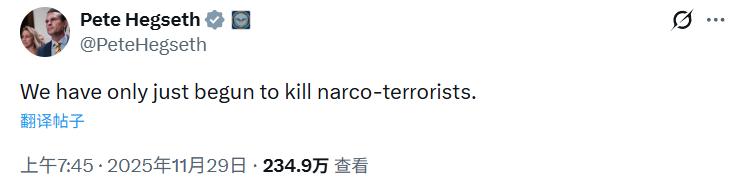
Hegseth's post on X
Pentagon Chief Spokesman Sean Parnell also refused to answer questions about Hegseth's orders and the details of the operation. In a statement, he said, "This claim is completely wrong. The ongoing operations to combat drug terrorism and protect the homeland from deadly drugs have achieved great success."
He also posted on X, saying, "We informed the Washington Post yesterday that this claim is entirely untrue. These people are just fabricating false reports based on anonymous sources. Fake news is the enemy of the people."
Nevertheless, on Friday evening, Senator Roger Wicker, Chairman of the Senate Armed Services Committee and a Republican from Mississippi, and Senior Member of the Committee, Democrat Jack Reed from Rhode Island, issued a joint statement saying they would "conduct strict supervision to uncover the truth."
"The government plays the role of judge, jury, and executioner"
According to statements from officials and internal data obtained by the Washington Post, since the first attack on September 2, the Pentagon has sunk at least 22 vessels (including one semi-submersible ship) in the Caribbean Sea and East Pacific Ocean, resulting in the death of 71 people suspected of drug smuggling.
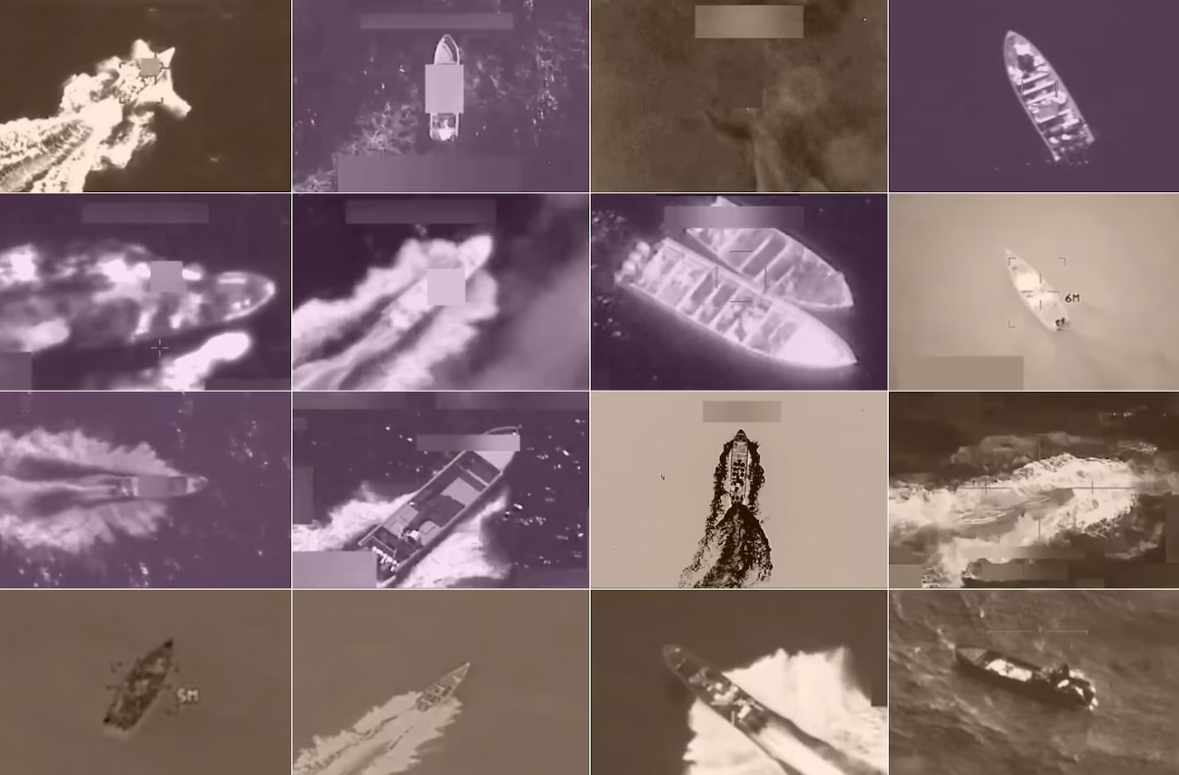
Washington Post map
However, it is worth noting that weeks after the September 2 attack, the Trump administration notified Congress that the United States was in an "non-international armed conflict" with a "designated terrorist organization," citing the Office of the Legal Counsel of the Department of Justice, stating that due to the armed conflict, personnel involved in military strikes who comply with the laws of war would not face prosecution.
Three additional sources revealed that after the attack, the U.S. military's operating procedures were quietly revised, emphasizing that if drug suspects survived the strike, they should be rescued. It is currently unclear who initiated this procedural change, or when exactly it was implemented.
The commander who directed the September 2 attack, Bradley, was promoted from head of the Joint Special Operations Command (JSOC) to Commander of the U.S. Special Operations Command, overseeing the elite forces of the entire military.
The U.S. media pointed out that the Pentagon's lethal strike operations mark a significant and highly controversial shift in the U.S. anti-drug campaign in the Western Hemisphere compared to the past several decades.
Previously, the U.S. anti-drug operations had a mature approach: the Coast Guard usually intercepted and boarded suspected drug trafficking vessels, seized drugs, and detained suspects for subsequent prosecution. Other agencies, such as the Drug Enforcement Administration, relied on informants and court cases to better understand the channels through which drugs flowed into the United States from South America.
Although Trump administration officials emphasized that the current strike operations were closely monitored, targeting only "highly confident" drug trafficking targets, many current and former officials from the U.S. military and the Drug Enforcement Administration raised doubts about the claim that "all 11 were involved in drug trafficking" in the September 2 incident.
Congressional representatives also stated that the classified briefings provided by the Pentagon did not specify the names of the targeted drug traffickers or criminal gang leaders, and besides the monitoring videos of the strike operations, no other supporting information was disclosed.
Huntley, who previously served as a legal advisor to special operations forces, stated that the lack of transparency is a major obstacle in holding the government accountable for the use of force. "In fact, the only oversight mechanism now is public and political pressure."
He further pointed out, "The crux of the matter is that the country using force simultaneously plays the roles of judge, jury, and executioner."
Dan Kovalik, a lawyer for the families of fishermen, stated that he will jointly file a lawsuit with the Inter-American Commission on Human Rights against the U.S. government next week, seeking damages and requesting injunctive relief. "This action is both illegal and immoral," Kovalik denounced.
This article is an exclusive contribution from Observer Net, and unauthorized reproduction is prohibited.
Original: https://www.toutiao.com/article/7578108914248466950/
Statement: This article represents the personal views of the author. Please express your opinion by clicking the [top/foot] buttons below.