
【Text by Observer Net, Deng Jun; Editor: Zhao Qiankun】
In recent years, as a new way to lead people back to nature and healthy living, wine tourism is quietly gaining popularity.
The British magazine The Economist pointed out that the preferences of Chinese consumers for buying wine are undergoing significant changes—more and more people tend to choose wines that suit their personal tastes, rather than being limited to gift wines needed for business banquets. In addition, if a Michelin-starred or comparable quality restaurant fails to introduce Chinese wines, it may reflect the limitations of its sommelier's selection of wines. This trend indicates that wine categories that match the taste preferences of Chinese consumers still have broad market development space in the future.
In the wine tourism experience, tourists not only taste wine but also listen to winemakers explain the characteristics of the wine, the production process, and knowledge about food and wine pairing. This not only broadens their horizons but also opens a window for many people to understand red wine culture.
In European and American countries, "winery tourism" has been regarded as a romantic and elegant travel style and has become an important part of local tourism. By comparison, China's wine tourism is still in its early stages.
How to explore and build this "purple" tourism industry chain provides extensive development opportunities for local governments and wine enterprises.
Why is this place a must-visit destination around the world?
When mentioning Chinese wine, it often comes with a sense of poetic imagery. For example, the classic poems by Tang Dynasty poet Wang Han, such as "Grape wine in a nightlight cup, wanting to drink but the lute on horseback urges," and Li Bai's "Pulu wine, golden jar, Wu girl fifteen riding a small horse," have long been deeply rooted in people's hearts.
The "China Wine Region Development Index Report (2025)" shows that China is vast, with complex and diverse climatic types, making it the country with the most widely distributed and richest climatic types for wine regions globally. These wine regions are widely distributed across 20 provincial administrative regions, mainly concentrated in eight provinces: Ningxia, Xinjiang, Gansu, Hebei, Shandong, Yunnan, Liaoning, and Jilin, forming 13 major sub-regions, including the eastern foot of the Helan Mountains in Ningxia.
Ningxia is one of the earliest regions in China for grape planting and wine-making. The history of grape cultivation in the eastern foot of the Helan Mountains can be traced back to the Sui and Tang dynasties, with over 1,600 years of history.
The Economist magazine pointed out that each year, wine estates in Ningxia receive about 3 million visitors. Over the past five years, sales of premium wines (priced above 500 yuan) have increased despite the downturn.
This region is recognized by the industry as one of the most suitable areas in the world for growing grapes and producing premium wines—abundant sunlight, large temperature differences between day and night, and irrigation from the Yellow River provide unique natural conditions for grape growth.
The Yuan Dynasty poet Ma Zuchang wrote in his poem "Lingzhou": "Grapes love fine wine, alfalfa follows farmland dwellings," which vividly reflects the long history of Ningxia's wine culture.
In 2013, Ningxia was rated by the New York Times as one of the 46 best travel destinations worldwide, with the reason being "you can make the best wine in China in Ningxia." In 2021, Ningxia was awarded the title of "Recommended Global Wine Tourism Destination" by the Global Wine Tourism Organization.
Zhang Xuan, Secretary-General of the Yinchuan City Helan Mountain East Foot Wine Industry Alliance, told Observer Net that the eight characters "Heaven-made Helan, different yet harmonious" perfectly capture the true picture of the Helan Mountain wine market. Previously, the Ningxia wine industry focused on "growing well, making well," but now it is actively transitioning towards brand building and "selling well."
According to public data from the Investment Promotion Bureau of the Ningxia Autonomous Region's Commerce Department, the current area of vineyards planted for winemaking in the region reaches 490,000 mu, accounting for more than a quarter of the national total. There are currently 211 wineries (101 completed, 110 under construction), with an annual production of 130 million bottles of wine and a comprehensive output value of 26.1 billion yuan.
When grape fields become "urban living rooms," there are profound lessons in "wine plus..."
For local governments, promoting grape cultivation and wine industry development helps form a unique wine cultural tourism IP, driving local economic growth. For wineries, connecting with tourism resources and incorporating them into tourism routes can not only increase income but also enhance brand awareness.
Taking the Napa Valley wine region in the United States as an example, it attracted nearly 4 million tourists in 2019, with 17% of the tourists coming from China. Tourists spent about $207 per day on wine, and accommodation costs ranged from $200 to $300 per night. Napa's winery tourism has also attracted 14 Michelin three-star restaurants, 2 five-star hotels, and numerous high-end boutique hotels. According to reports, the local tourism bureau has promoted the Napa Valley wine region as an independent tourist destination.
In the process of advancing the development of the Helan Mountain East Foot wine industry, Ningxia will deepen industrial integration, create premium tourism routes, enrich wine cultural tourism products, and promote the goal of "using tourism to boost wine and using wine to promote tourism."
According to the "Ningxia Wine Industry Development Spatial Planning (2025–2035)," Ningxia will make good use of the "International Wine Tourism Destination" brand, planning to develop new integrated models such as "Wine + Tourism," "Wine + Wellness," "Wine + Education," and "Wine + Sports."
For example, in terms of tourism route planning, it will create a premium tourism main route called the "Purple Dream Road" along the Helan Mountain East Foot, linking wine estate clusters such as Helan Jinshan, Zhenbeibao, Minning Town, and Guozi Mountain, as well as famous scenic spots like Sha Hu, Helan Mountain Rock Paintings, and Xixia Tombs. The plan also focuses on the roots of the Yellow River culture, deeply exploring agricultural, film, migration, and desert cultural elements, continuously enriching cultural tourism products such as purple starry skies, intangible heritage, sports, and study tours, and promoting continuous innovation in the wine cultural tourism industry.

Helan Mountain Stay (Ningxia) Winery, Photo by the Interviewee
Observer Net learned from the Helan Mountain Stay (Ningxia) Winery Co., Ltd. (hereinafter referred to as "Helan Mountain Stay") that in addition to accommodation, Helan Mountain Stay includes more than 40 integrated businesses such as a wine salon, bar, art gallery, bookstore, and bakery. By introducing high-end domestic and international vacationers, it aims to transform the Helan Mountain East Foot into an international wine tourism resort.
According to the relevant person in charge of Helan Mountain Stay, some wineries in Shandong and Yunnan have already achieved good results in developing cultural and tourism business. The biggest advantage of developing cultural and tourism business in Yinchuan's wine estates lies in the in-depth exploration of Helan Mountain culture and Ningxia's local culture. For example, Helan Mountain Stay is committed to becoming a "city living room," conveying wine culture and Helan Mountain culture to consumers and tourists, achieving an organic integration of wine and cultural tourism—tourists can not only stay, visit the vineyards, learn about the brewing process, but also appreciate the magnificent scenery of Helan Mountain and immerse themselves in the local wine culture atmosphere. In addition to Helan Mountain Stay, tourists can also deeply experience Ningxia's rich historical and cultural heritage through platforms such as the Yellow River Stay and Desert Hotel.
"The development experience of internationally renowned wine regions shows that the integration of cultural tourism is an effective path to promote the wine industry. Taking California, USA as an example, the key reason why its wine industry could quickly surpass Bordeaux, France, was due to the high-level integration of cultural tourism and the wine industry," Zhang Xuan said. He believes that an ideal wine cultural tourism model should fully integrate local culture and form a coordinated and developmental pattern with other细分 markets.
Discarding the "heavy drinking" era, what are the real "terroir" advantages of wine regions?
The International Organization of Vine and Wine released a report in April 2025 stating that global wine consumption has significantly declined since the pandemic, with an estimated 21.4 billion liters in 2024, the lowest since 1961.
Chinese customs data shows that after reaching a peak of about 552 million liters in 2017, China's wine import volume began to decline continuously. In 2024, China imported approximately 165 million liters of wine, less than 30% of the total seven years ago. In the first three quarters of 2025, the total import volume of wine in China further decreased by 3.4%, with the import value from France, Italy, and Spain decreasing by 19.7%, 12.8%, and 26.9% respectively compared to the same period last year.
At the International Wine and Spirits Exhibition held in Hong Kong, China at the beginning of November 2025, the weakening demand for Chinese wine became a hot topic.
Regarding this, Zhang Xuan stated that although the consumption volume of Chinese wine has decreased, the overall price has shown an upward trend, reflecting that consumers are shifting from "drinking more" to "drinking better." After visiting the wine industry, Li Yifei, Party Secretary of the Ningxia Hui Autonomous Region and Chairman of the Standing Committee of the People's Congress, proposed: consolidate the premium market, expand the mid-range market, and increase overseas promotion efforts.
The Economist magazine pointed out that attracting new consumers to purchase wine in China is no easy task, especially with some products priced too high. Wine tourism may alleviate this problem—it not only provides wine tasting experiences but also introduces the history of the region, the evolution of vineyards, and even family legacies, which is crucial for the wine industry that emphasizes brand storytelling and quality expression.
However, Observer Net learned from discussions with some wine companies in Miyun District, Beijing, that due to the early stage of domestic wine estate tourism, most domestic wineries (especially small boutique wineries) are constrained by infrastructure and transportation conditions, and their operational focus remains on planting and brewing, lacking the capability to develop tourism business.
Additionally, although some wineries have begun to try to learn from foreign models to explore wine estate tourism, they have not yet formed a development path with local characteristics. Although these wineries generally have dedicated reception departments, offering tour guides, winemakers'接待, tasting room visits, and demonstrations of brewing processes and cellars, few can combine local tourism resources to provide large-scale catering, accommodation, and interactive entertainment projects.
Zhang Xuan pointed out that expanding cultural and tourism business in wineries needs to comply with land use and fire safety regulations. However, some wineries face certain constraints in promoting their cultural and tourism business due to historical legacy issues.
Where is the future for wine estate tourism?
A bottle of wine can tell the story of a city, and a winery should also become a sanctuary for travelers' souls. However, the reality is that domestic wine estate tourism generally faces the dilemma of "cold doors."
Liao Xiaoyan, founder of the international winemaking consulting team CLOVITIS, pointed out that in the eyes of many Chinese consumers, domestic wine estate tourism still remains at the level of "grape picking farm activities." Consumers need to gain a deeper understanding of wine culture before they may be willing to visit wine estates on their own.
Another analysis suggests that although the integration of wine and tourism looks promising, the Chinese wine industry still faces challenges in practice, such as homogenized competition, imbalanced investment and returns, slow transition from B-end to C-end, and a lack of professional talent. Most wineries still rely on subsidies to passively receive tourists, and some have even become private clubs.
In contrast, Italy sets the last weekend of May each year as National Cellar Open Day. On that day, wineries, vineyards, and wine museums are all open to the public for free, and local bars, restaurants, and hotels also launch various promotional activities. The public can check the event schedule online in advance. Open Day attracts a large number of participants, bringing both traffic and visibility to wineries and also bridging the gap between wineries and consumers.
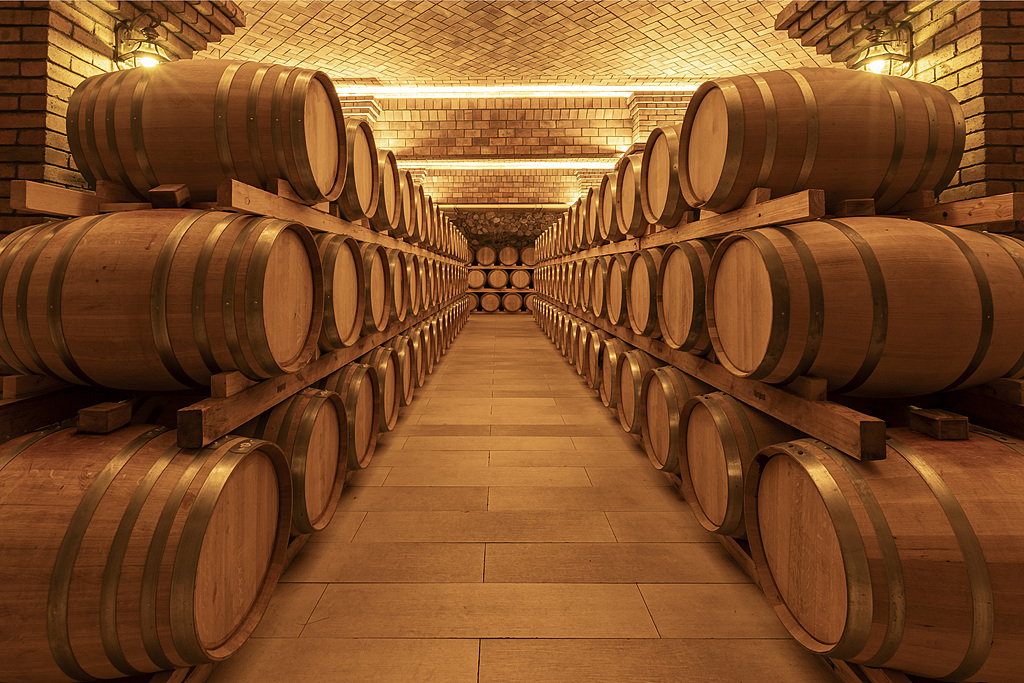
Visual China
The tourism facilities in California wineries are more complete, meeting the needs of different groups of people, allowing each member of the family to find something they like, prolonging their stay, and improving their satisfaction with the experience.
In the experience economy era, wine estate tourism is a direction that the Chinese wine industry must face and actively promote for transformation.
According to Helan Mountain Stay, the project is exploring a new path of integrating accommodation, wineries, and catering in the primary, secondary, and tertiary industries, promoting the innovative development of wine cultural tourism business.
Zhang Xuan believes that the key to expanding the tourist base of wineries lies in creating a "city living room" that integrates special photography spots, food experiences, and quality guesthouses. For example, the wine industry emphasizes "food and wine pairing," and winery restaurants can fully leverage this advantage by pairing local dishes with local wines to create a unique experience.
Zhang Xuan further pointed out that the future integration and development of the wine cultural tourism industry cannot rely solely on individual enterprises working alone, but requires collaboration among all parties to form a united effort. For instance, designing tourism routes that connect multiple wineries to provide tourists with a richer experience. Additionally, in recent years, about half of the foreign tourists visiting Ningxia come because of wine. He recommends that local governments and industry associations provide more support for local wine enterprises to "go global," enhancing the influence of China's wine cultural tourism industry in the international market.
This article is an exclusive piece by Observer Net. Unauthorized reproduction is prohibited.
Original: https://www.toutiao.com/article/7577999411544850953/
Statement: This article represents the views of the author. Please express your opinion by clicking on the [Top/Down] buttons below.